
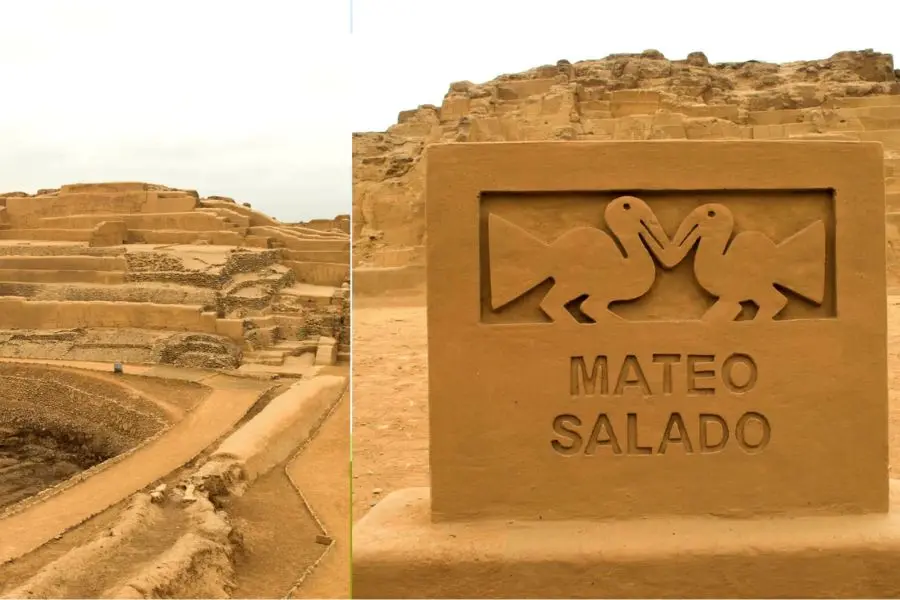
In the heart of modern Lima, surrounded by busy streets and urban neighborhoods, the Mateo Salado Archaeological Complex rises as one of the city’s most fascinating pre-Hispanic sites. Built by the ancient Ychsma culture more than 900 years ago, this impressive complex of five pyramids once served as an important ceremonial and administrative center connected to the coastal branches of the Qhapaq Ñan, the vast Inca road network.
Located between the districts of Pueblo Libre and Breña, Mateo Salado covers more than 16 hectares where ancient adobe pyramids coexist with the modern skyline of Lima, creating a striking contrast between Peru’s ancient past and contemporary urban life. Today, the site offers travelers a unique opportunity to explore one of Lima’s hidden archaeological treasures while discovering the history of the civilizations that flourished on the central coast of Peru before the arrival of the Incas.
In this guide, you’ll discover the history of Mateo Salado, its pyramids, cultural importance, opening hours, location, and everything you need to know before visiting this remarkable archaeological complex in Lima.
The Mateo Salado Archaeological Complex was built around 1100 A.D. during the period known as the Late Intermediate Period, a time when several powerful cultures developed along the central coast of Peru before the expansion of the Inca Empire. The site was originally constructed by the Ychsma culture, an important pre-Hispanic civilization that inhabited the valleys surrounding present-day Lima.
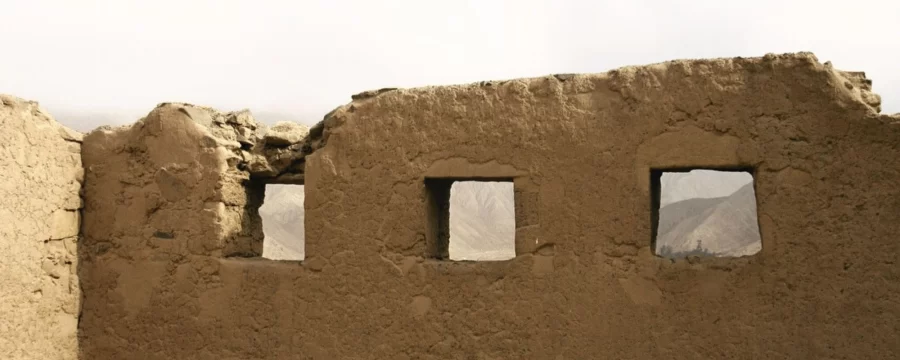
For centuries, Mateo Salado functioned as a major ceremonial and administrative center, distinguished by its adobe pyramids, plazas, and walled pathways. The complex played an important role in the social and religious life of the Ychsmas, who controlled large areas of the central Peruvian coast.
Around the year 1430, the site was incorporated into the expanding Inca Empire and became connected to the coastal branches of the Qhapaq Ñan, the extensive Inca road network that linked different regions of the Andes. During this period, the Incas adapted and reused the complex while preserving much of its original ceremonial importance.
Travelers interested in exploring the ancient history of Lima can include Mateo Salado as part of a broader cultural experience through this 4-day Lima tour, which combines archaeological sites, colonial landmarks, and some of the city’s most iconic attractions.
Although there is no official record of a single discoverer of Huaca Mateo Salado, the archaeological complex was first documented in historical writings during the colonial period. One of the earliest references appears in the “Moralized Chronicle” published in 1638 by Spanish friar Antonio de la Calancha, who described the pyramids as an ancient place associated with the Incas and coastal fishermen.
Centuries later, in 1935, renowned archaeologist Julio C. Tello, widely considered the father of Peruvian archaeology, carried out some of the first formal studies at Mateo Salado. Tello played a crucial role in protecting the site at a time when parts of the pyramids were being dismantled by local residents who reused adobe materials for construction, causing severe damage to the original structures.
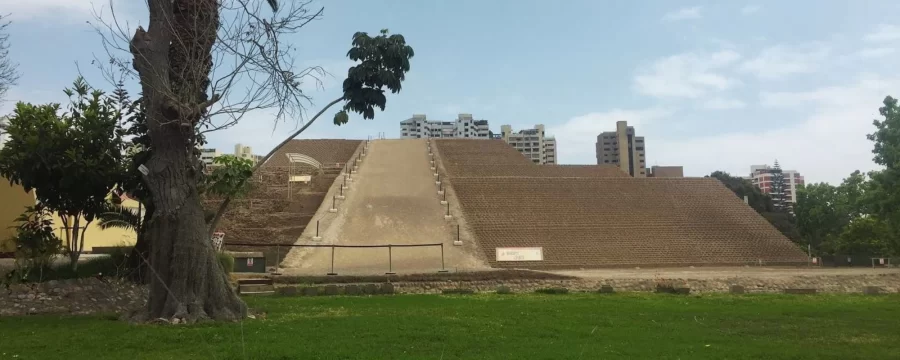
During the 20th century, the rapid and unplanned urban expansion of Lima gradually surrounded the archaeological complex with modern neighborhoods and roads. As a result, several sectors of Mateo Salado became physically separated by urban development, creating the unique visual contrast that visitors see today between ancient pyramids and the modern cityscape.
Archaeologists believe Huaca Mateo Salado served as an important ceremonial and administrative center for the Ychsma culture, one of the major pre-Hispanic civilizations that inhabited the central coast of Peru before the arrival of the Incas.
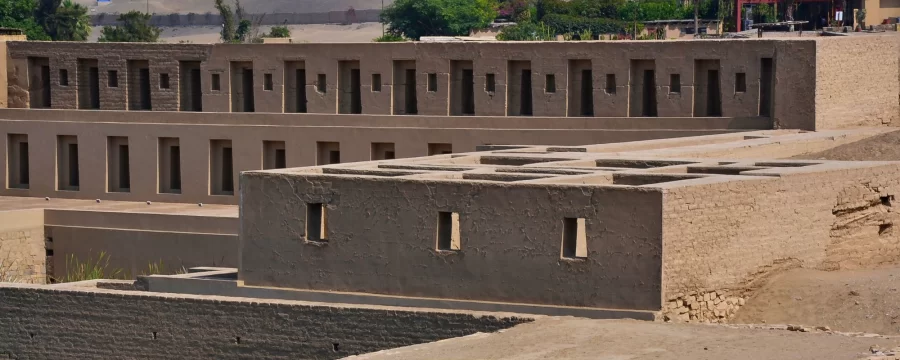
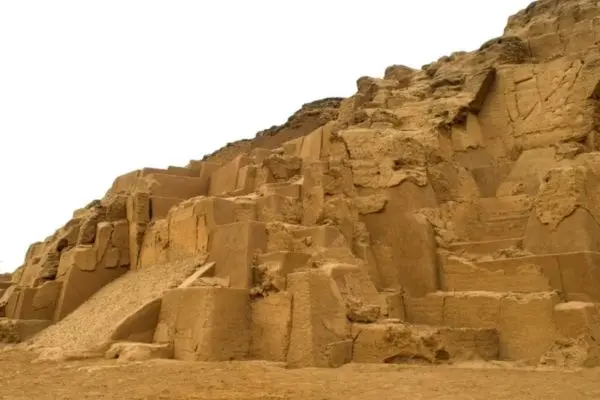
The complex is composed of five large truncated pyramids, ceremonial plazas, and walled pathways connected to the coastal branches of the Qhapaq Ñan, the vast Inca road system. These structures were likely used for religious ceremonies, political gatherings, and administrative activities linked to agriculture, trade, and coastal communities.
Today, Mateo Salado is considered one of the most important surviving examples of pre-Hispanic urban architecture in Lima, preserving centuries of history hidden within the modern capital of Peru.
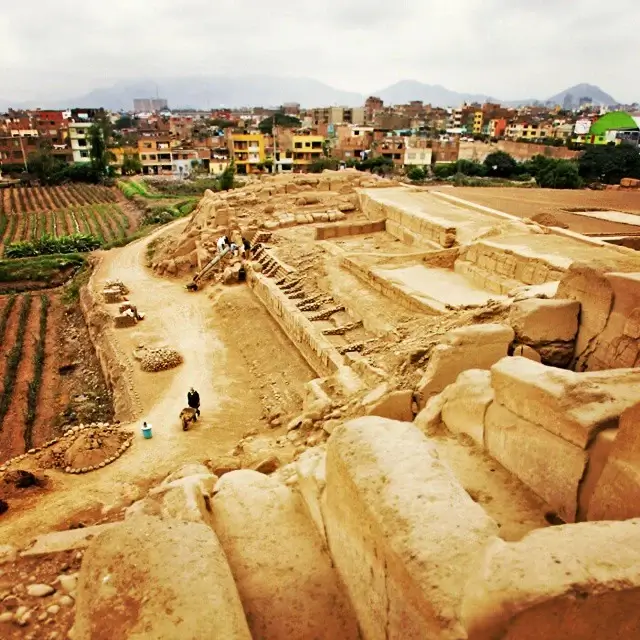
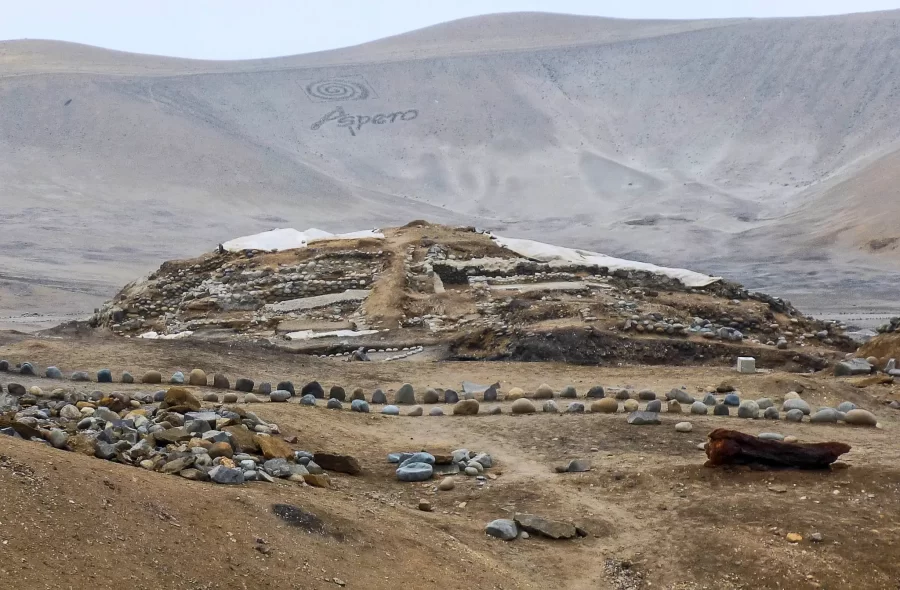
Rising above the rest of the complex, Pyramid A, also known as the “Templo Mayor,” is the tallest and most important structure at Mateo Salado. The pyramid measures approximately 18 meters high and more than 160 meters long, featuring large terraces, stairways, and elevated platforms that were likely used for major religious and ceremonial activities of the Ychsma culture.
Its commanding position within the complex suggests that this pyramid served as the principal ceremonial temple before the arrival of the Incas.
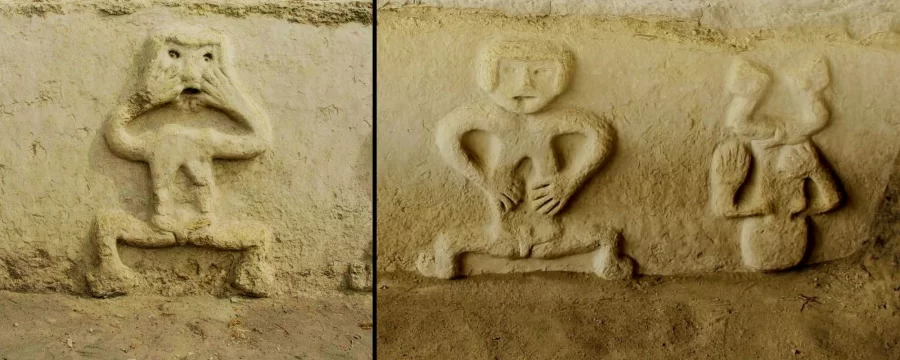
Pyramid B is the second-largest structure within the archaeological complex and is surrounded by large plazas and ceremonial enclosures. Archaeologists discovered reliefs and decorative figures representing coastal birds and marine symbolism on some of its walls, which is why it became known as the “Pyramid of the Birds.”
The presence of bird imagery reflects the strong connection between the ancient coastal civilizations of Lima and the Pacific Ocean, fishing traditions, and local religious beliefs.
Pyramid C rises approximately 9 meters high and is characterized by a series of stepped enclosures arranged along a north-to-south axis. Although smaller than the main pyramids, this structure likely played an important role in the ceremonial organization of the complex.
Its elevated platforms and internal divisions reveal the sophisticated architectural planning developed by the Ychsma civilization centuries before the Spanish arrival in Peru.
Located outside the original walls of the complex, Pyramid D is one of the smallest structures at Mateo Salado, reaching approximately 8 meters in height. This pyramid faces toward the Pacific coast, although archaeologists still have limited information regarding its original purpose.
Due to the lack of extensive excavations in this sector, many aspects of Pyramid D remain a mystery, adding to the archaeological intrigue surrounding the site.
The smallest structure in the complex is Pyramid E, often referred to as the “Funerary Pyramid.” Measuring approximately 6 meters high, this sector was originally built by the Ychsmas and later reused by the Incas as a burial area.
Archaeologists have discovered more than 50 burials within this pyramid, although only a few tombs were found intact. These findings provide valuable insight into ancient funerary practices, religious beliefs, and social organization on the central coast of Peru before the colonial period.
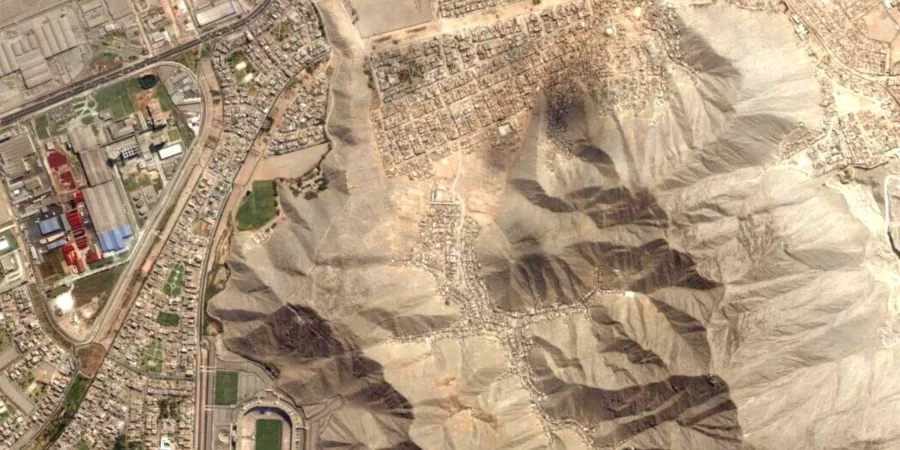
This archaeological complex is in the city of Lima, located between the districts of Pueblo Libre and Breña, at the height of the 11th block of the Cercado de Lima.
Although it is possible to make the visit even by public transport, we recommend that you request the service with a formal and authorized travel agency.
The huaca of Mateo Salado is open from wednesday to sunday, from 9.00 am until 4 pm.
The entrance fees are:
It is worth mentioning that the military in exercise, over 60 years old, teachers in exercise and people with disabilities have a 50% discount on the fare that corresponds to them.
It is also necessary to make a reservation in advance through the website of the huaca Mateo Salado, as the capacity in the huaca is limited.
aplicaciones.cultura.gob.pe/MINC-RVM/reservavisita/?museo=63