
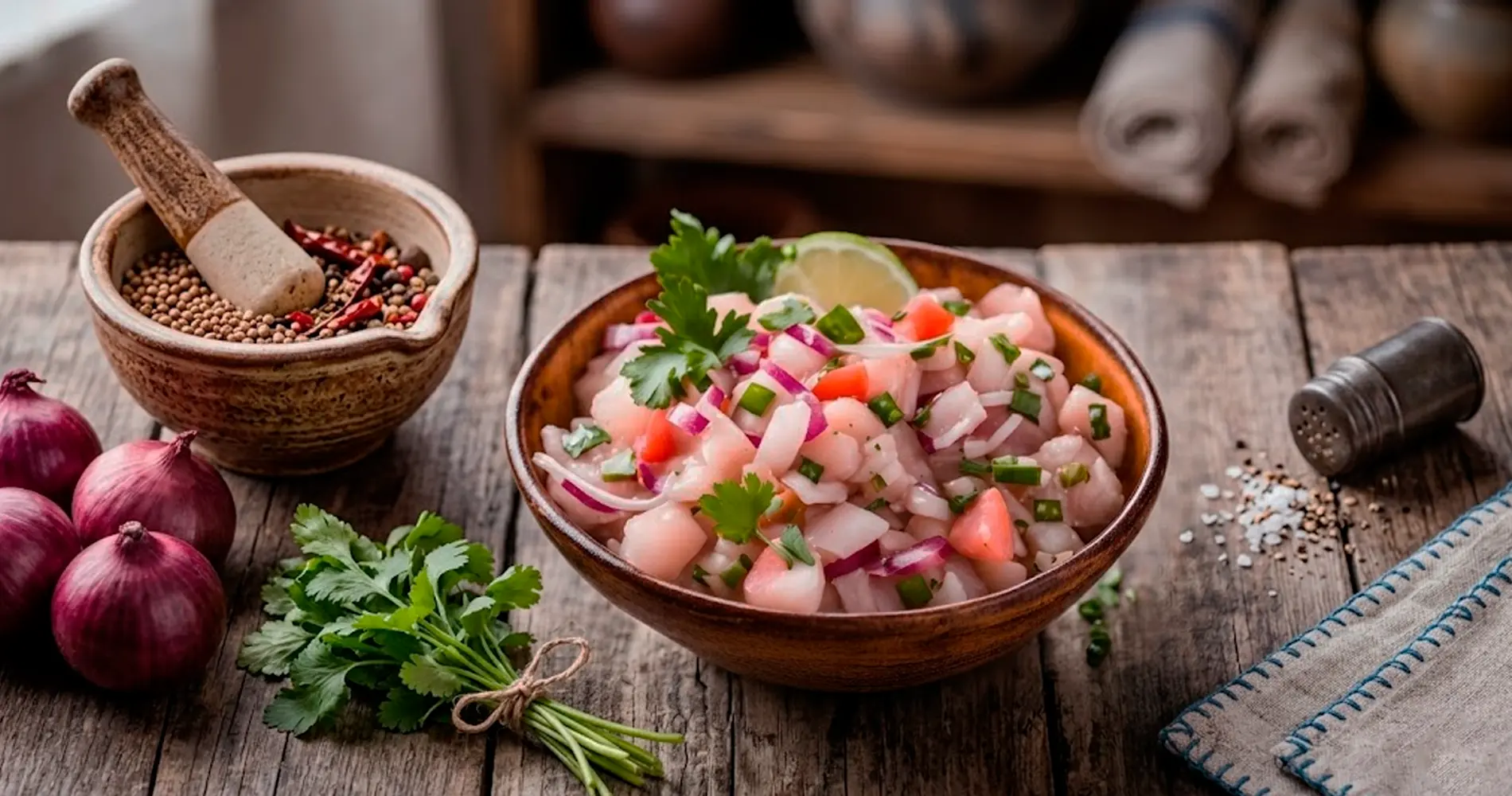
When it comes to understanding a country’s cultural identity, few things say as much as its food. In the case of Peru, recognized worldwide for its rich gastronomy, there is one dish that stands out above all: ceviche.
Although Peruvian cuisine is very diverse and full of flavors, ceviche is considered the official national dish. It represents the essence of the Peruvian coast and its close relationship with the Pacific Ocean.
More than just a meal, ceviche is a true symbol of national pride and a perfect example of how fresh, vibrant ingredients can come together in a unique balance.
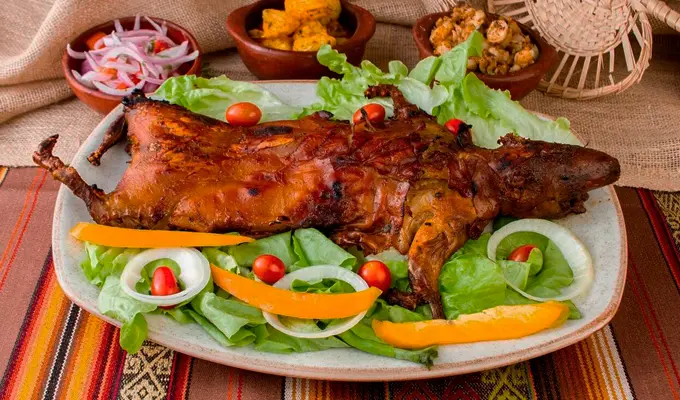
Peruvian ceviche stands out for something very special: its simplicity and the quality of its ingredients. Unlike other versions across Latin America, everything here revolves around fresh fish, which is marinated in the famous tiger's milk , an intense mixture of freshly squeezed lime juice, salt, sliced onions, and ají amarillo.
The lime plays a key role, as it “cooks” the fish in just a few minutes, keeping its texture soft and fresh.
It’s also usually served with sweet potato, Peruvian corn, and canchita, creating a perfect combination of flavors: the acidity of the lime, the spiciness of the chili, and that salty touch that makes it so irresistible. In every bite, it’s a clear representation of the essence of the Peruvian coast.
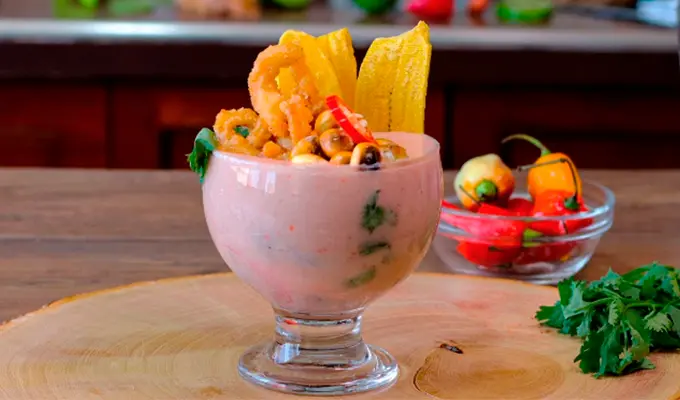
Although ceviche is the country’s most representative dish, you can’t talk about Peruvian cuisine without mentioning lomo saltado.
This dish perfectly reflects the “chifa” influence, a unique fusion between Chinese cooking and Peruvian ingredients. It’s prepared in a wok over high heat, combining strips of beef with red onion, tomato, and ají amarillo, all seasoned with soy sauce and a touch of vinegar.
It’s served with rice and crispy French fries, creating a hearty and very flavorful combination. It’s one of those dishes that never misses from the table and represents the blend of cultures that has shaped Peru’s identity over time.
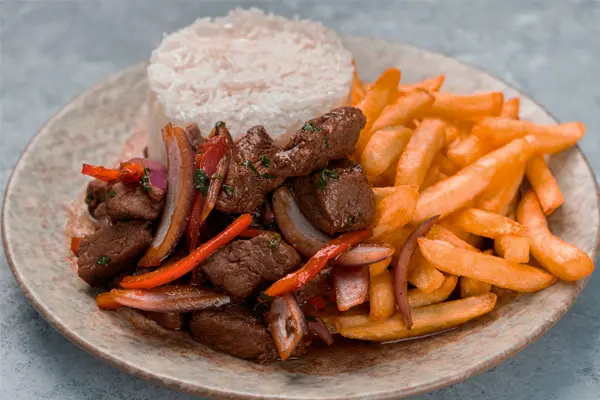
As you move away from the coast and head into the Andes, Peruvian cuisine changes completely, connecting with very ancient traditions even those from before the Inca Empire. Here, the flavors are more intense and closely tied to the land and local customs.
One of the most representative dishes is cuy, which is usually prepared roasted or fried and is highly valued for its flavor and nutritional value.
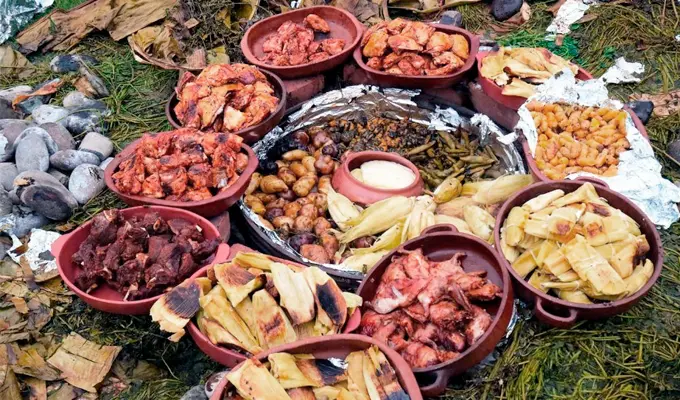
Another classic is pachamanca, a special preparation cooked underground with hot stones. It combines different meats, potatoes, fava beans, and humitas, all seasoned with Andean herbs like huacatay, giving it a unique flavor.
More than just food, these dishes reflect the deep connection of the Peruvian people with the Pachamama (Mother Earth). Tasting them is a way to truly connect with the essence of the highlands and enjoy an authentic experience.
More than 3,000 varieties of potatoes
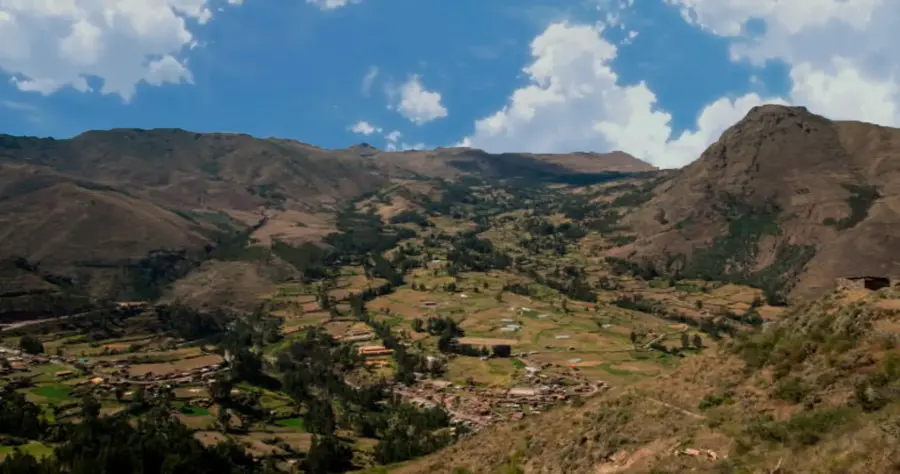
Peru is considered the birthplace of the potato, and that’s reflected in its incredible diversity. From purple to yellow varieties, each one has its own flavor, texture, and use in cooking. Discovering this variety especially in places like the Sacred Valley of the Incas means exploring an essential part of Andean history and agricultural richness.
Pisco Sour: the taste of Peru in a glass
No Peruvian food experience is complete without trying a Pisco Sour. This iconic drink is made with pisco, a grape based spirit produced in the southern valleys of the country, and has become Peru’s most representative cocktail. Its history and flavor have made it famous worldwide.
ají amarillo: the touch that changes everything
Ají amarillo is one of the most important ingredients in Peruvian cuisine. It’s present in many traditional dishes like causa limeña or papa a la huancaína. Its vibrant color and mild heat are part of the unique signature that defines the flavors of Peru.