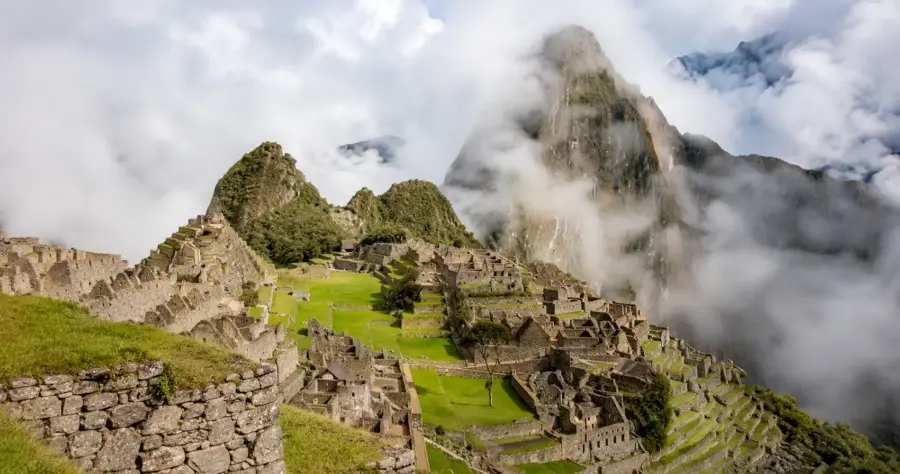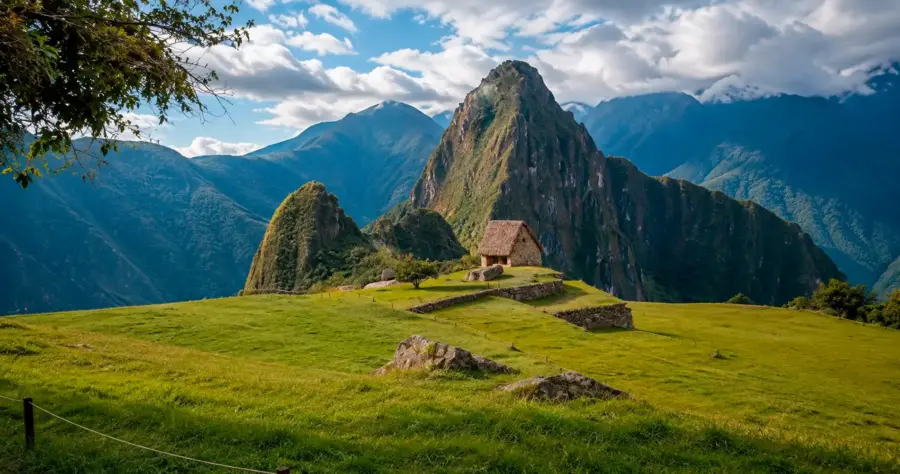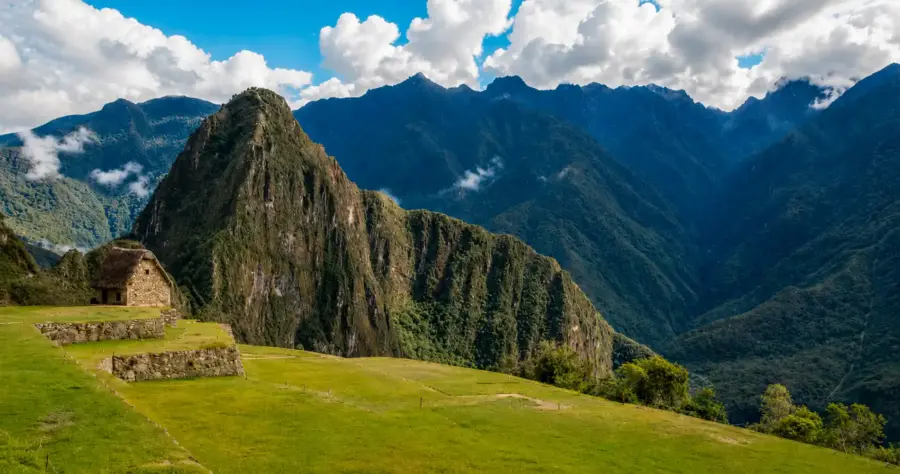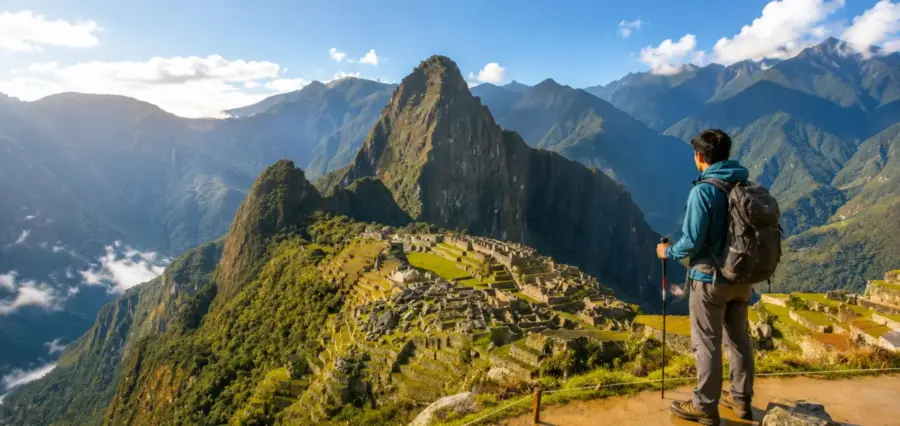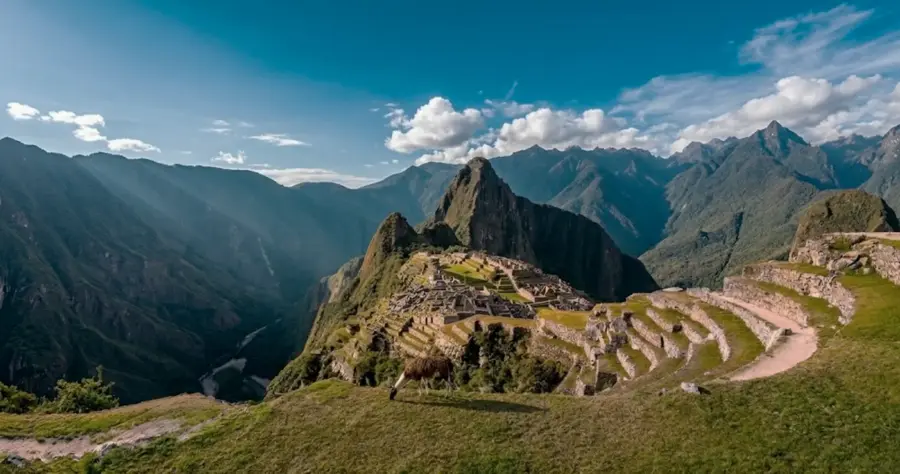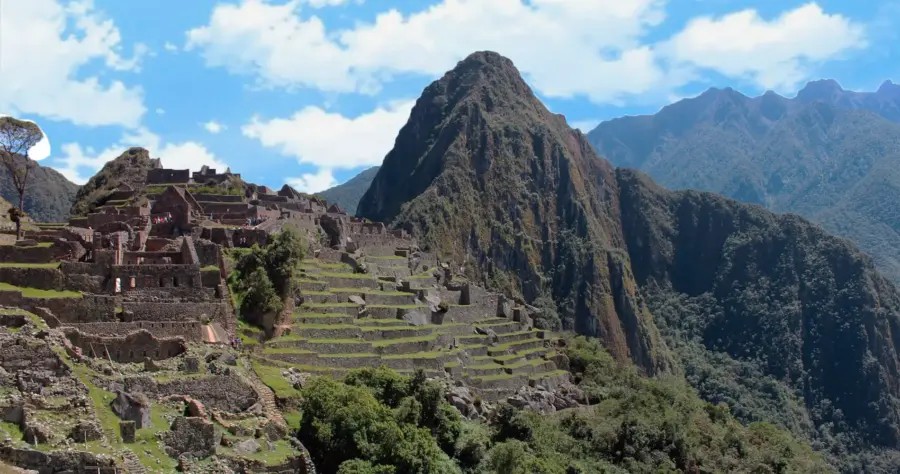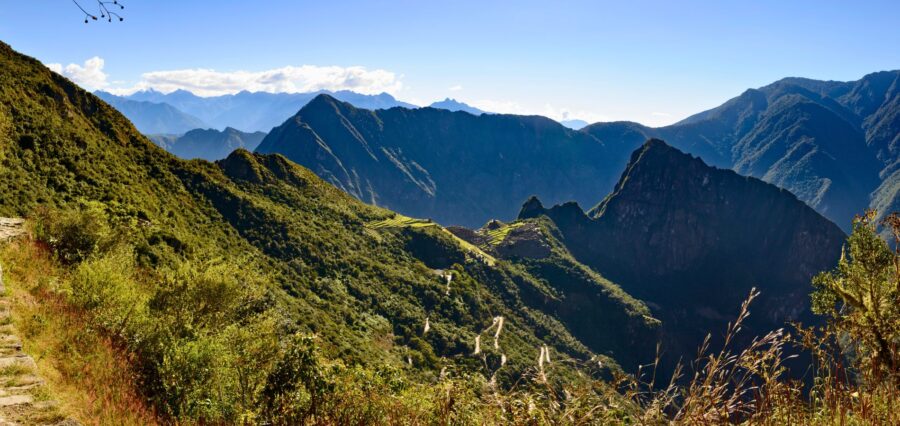

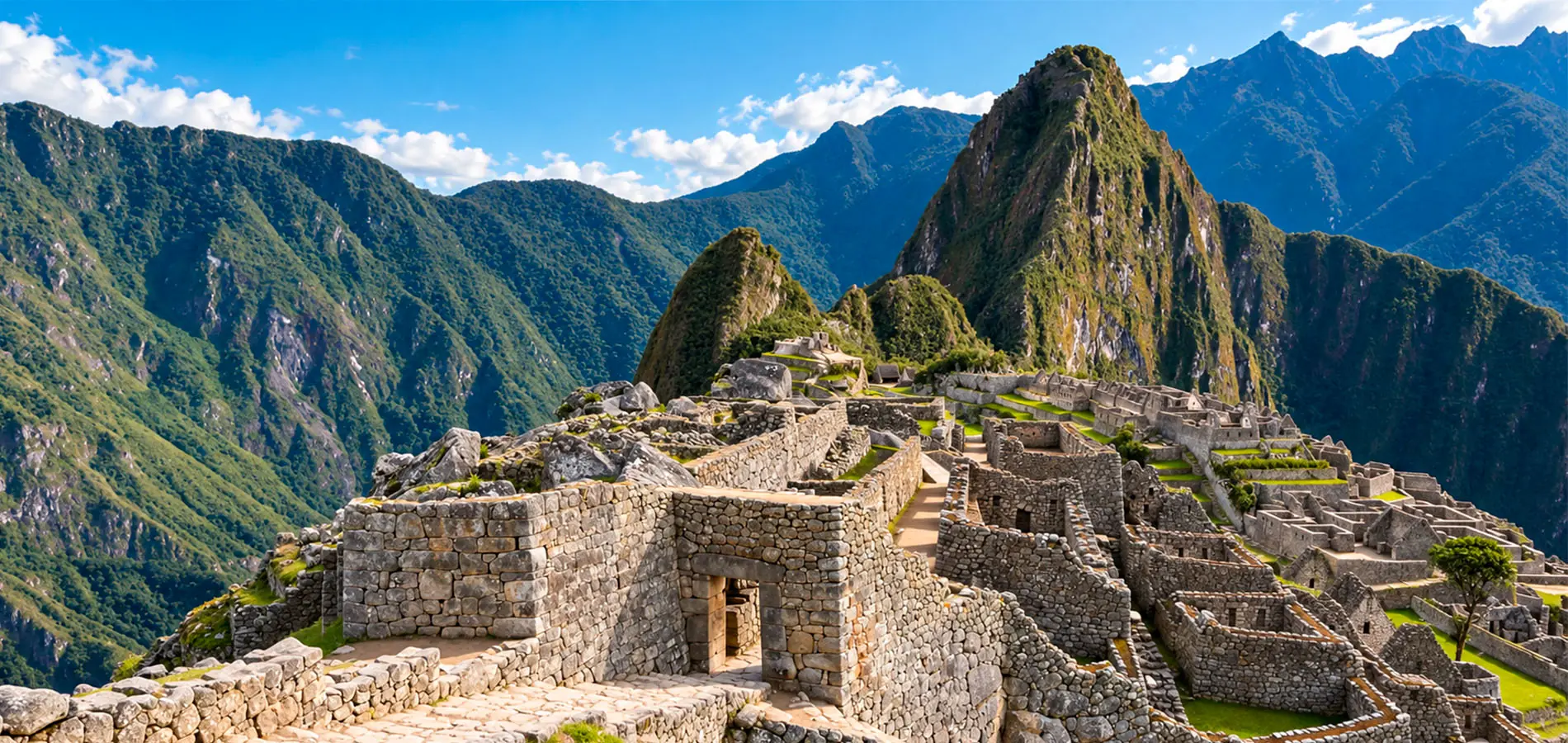
Machu Picchu is much more than the classic postcard view. Within the Historic Sanctuary, temples, plazas, ceremonial enclosures, mountains, and ancient paths reveal different aspects of Inca architecture and worldview. Exploring these spaces with some context helps us better understand why this place continues to spark so much curiosity among travelers from around the world.
In this guide, we have gathered 10 must-see places in Machu Picchu, from Huayna Picchu and the Temple of the Sun to the Intihuatana, the Sacred Rock, Inti Punku, and the Inca Bridge. Each offers a different experience, but there is an important detail to consider when planning your visit: not all of them are part of the same route, as access depends on the circuit, route, and, in some cases, the season you choose.
Before choosing your ticket: Machu Picchu is visited through official circuits and routes. Therefore, it is advisable to check which places are included in each ticket before planning your itinerary.
Heritage context: according to the Ministry of Culture, the Historic Sanctuary of Machupicchu has been inscribed on the UNESCO World Heritage List since 1983 as a mixed heritage site, due to its cultural and natural values. In addition, SERNANP states that the sanctuary protects 32,592 hectares and encompasses 24 wild ecosystems, ranging from humid montane forests to high-mountain areas.
Machu Picchu's attractions are distributed across different official circuits and routes. There is no single ticket that includes all of these places, so it is advisable to choose your ticket according to what you are most interested in exploring.
| Place | Circuit / route | Access and recommendation |
|---|---|---|
| Huayna Picchu | Circuit 3 · Route 3-A | Requires a specific ticket for Waynapicchu Mountain. It is advisable to book in advance. |
| Temple of the Sun | Circuits 2 and 3, depending on the route | In Circuit 2, it is viewed from the lookout point; in Circuit 3, the route passes through the sector associated with the temple. |
| Intihuatana | Circuits 2 and 3, depending on the route | Access depends on the route enabled for the visit and the conservation measures currently in place. |
| Temple of the Three Windows | Circuit 2 · especially Route 2-A | It is part of the Sacred Plaza and is one of the highlights of the classic route. |
| Sacred Plaza | Circuit 2 · especially Route 2-A | It includes the Main Temple and the Temple of the Three Windows. |
| Guardhouse | Circuit 1 · Panoramic | The nearby terraces offer the classic views of Machu Picchu; the exact viewpoint depends on the route chosen. |
| Sacred Rock | Circuit 2 · Routes 2-A and 2-B | It is included in the classic routes through the urban sector of the Inca city. |
| Temple of the Condor | Circuit 3 · depending on the route | It is located within the Royal sector, and access depends on the authorized route. |
| Inti Punku | Circuit 1 · Route 1-C | Route available only during the official high season. |
| Inca Bridge | Circuit 1 · Route 1-D | Route available only during the official high season. |
Important: circuits may be modified for conservation or safety reasons. Before purchasing your ticket, check the current information on the official Machu Picchu website.
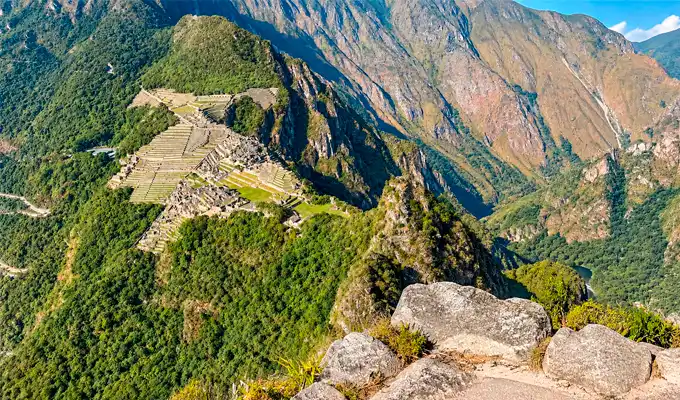
Huayna Picchu, called Waynapicchu in the official nomenclature, is the mountain that appears behind the Inca city in many of the most famous photographs of Machu Picchu. Its route offers views of the archaeological complex and the valley landscape from an elevated perspective, very different from the one found along the panoramic circuits.
Access is through Circuit 3 – Route 3-A: Waynapicchu Mountain and requires a specific ticket. The trail combines stone stairways, steep slopes, and some narrow sections, so it is advisable to consider the physical effort involved before choosing this route. If you want to plan your visit in greater detail, check our guide on how to visit Machu Picchu and Huayna Picchu in one day.
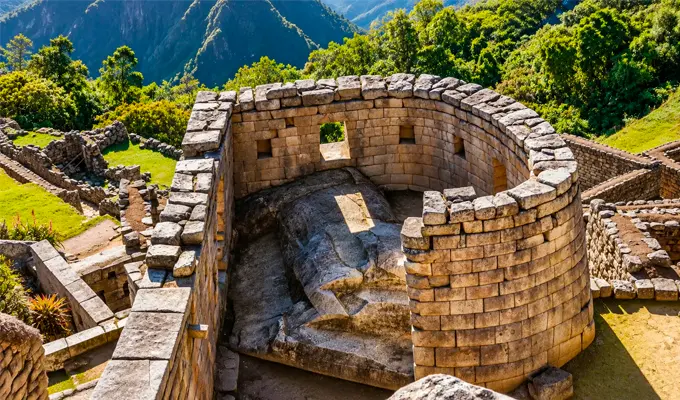
The Temple of the Sun in Machu Picchu is one of the most distinctive structures in the Inca city. Its semicircular wall was built over a large natural rock and stands out for its finely crafted stonework, as well as its trapezoidal windows and its integration with the rocky outcrop on which it stands.
Because of its shape, location, and relationship with sunlight, this space has been associated with ceremonial practices and astronomical observations related to the Sun. However, overly absolute interpretations should be avoided: rather than stating that each element precisely marked the solstices, it is more accurate to understand the structure as part of a complex in which architecture, landscape, and ritual practices were closely interconnected.
How is it visited? Depending on the circuit and route chosen, the Temple of the Sun can be viewed from its lookout point or from nearby sections of the authorized route. If you want to learn more about its history and features, you can consult our guide to the Temple of the Sun in Machu Picchu.
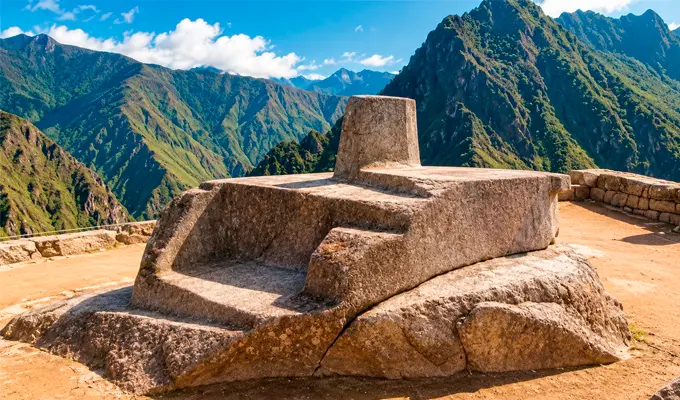
The Intihuatana is one of the most recognizable lithic elements of Machu Picchu. It is located at the top of a terraced hill and was carved directly from a rocky outcrop. Its elevated position, finely worked stone, and visual relationship with the surrounding landscape have made this sector one of the most studied areas of the Inca city.
It is often described as a “sundial”, but this expression can be somewhat oversimplified. Archaeological research associates it with astronomical and ceremonial functions, as well as with the observation of the Sun and horizon references. Rather than imagining it as a modern clock, it is more accurate to understand it as part of a space where astronomy, ritual practices, and the landscape were closely interconnected.
If you would like to learn more about the interpretations and characteristics of this monument, you can consult our guide to the Intihuatana of Machu Picchu.
The Temple of the Three Windows is located in the Sacred Plaza and is one of the most recognizable architectural complexes in Machu Picchu. Its main wall features three large trapezoidal openings, built with large, carefully worked stone blocks. The lintels and window sills were made from solid stone pieces, a detail that allows visitors to appreciate firsthand the high technical level of Inca architecture.
Rather than attributing a single, definitive meaning to it, it is better to view this structure as part of the ceremonial complex of the Sacred Plaza, alongside the Main Temple. Today, this sector is mainly associated with Circuit 2, especially Route 2-A. If you would like to learn more about its history, features, and location, you can consult our guide to the Temple of the Three Windows in Machu Picchu.
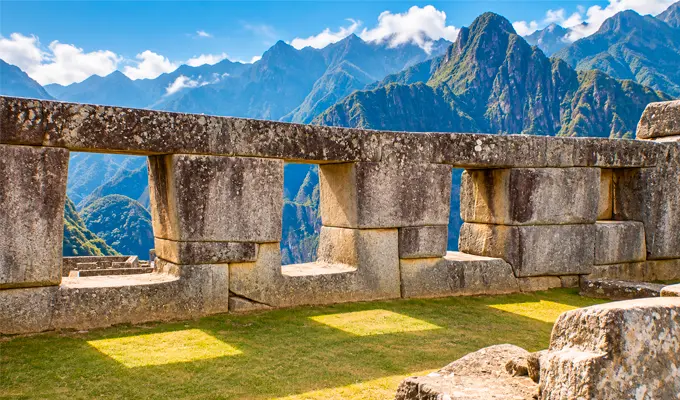
The Sacred Plaza brings together some of the most prominent ceremonial structures in Machu Picchu. This sector contains the Main Temple and the Temple of the Three Windows, two structures that allow visitors to appreciate the fine stonework and planning of one of the spaces with the greatest symbolic importance in the Inca city.
Rather than simply being an open plaza for stopping to take photographs, this complex helps us understand how ceremonial architecture was integrated with plazas, walls, and other sectors of the llaqta. The Decentralized Directorate of Culture of Cusco specifies that Route 2-A of Circuit 2 includes the Sacred Plaza, made up of the Main Temple and the Temple of the Three Windows. If you would like to learn more about one of its main structures, you can find additional information in our guide to the Main Temple of Machu Picchu.
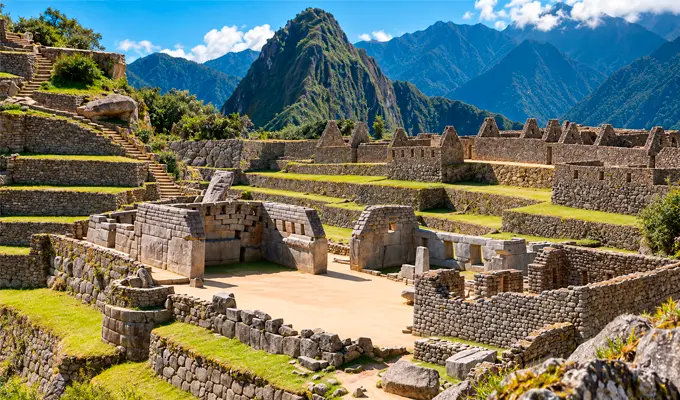
The area around the Guardhouse is one of the most recognizable points in Machu Picchu because its nearby terraces and platforms offer the classic panoramic view of the Inca city with Huayna Picchu in the background. From here, you can clearly appreciate the relationship between the urban sectors, agricultural terraces, and the mountainous landscape surrounding the archaeological site.
It is important to keep in mind that exact access to the platforms and viewpoints depends on the route chosen. Circuit 1 Panoramic includes the routes designed to offer these wide views, so it is advisable to check the itinerary included with your ticket before your visit. If this viewpoint is a priority for you, you can also consult our guide to the Guardhouse in Machu Picchu.
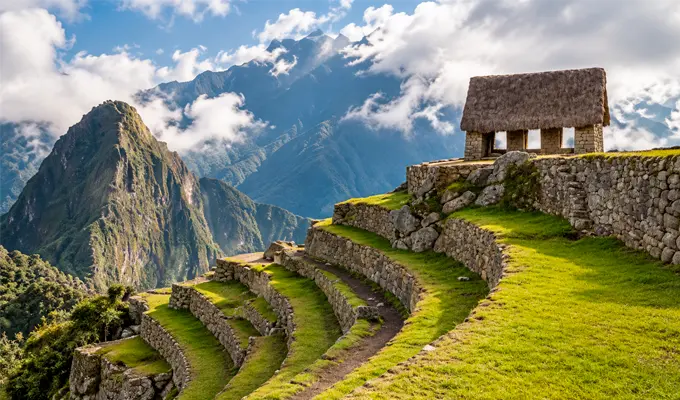
The Sacred Rock is a large monolith located in one of the most striking sectors of Machu Picchu. Its presence stands out because of the way it integrates with the mountainous landscape surrounding the Inca city, a relationship that is often interpreted in light of the importance that mountains and other natural elements held in the Andean worldview.
When observing it, it is worth paying attention both to the shape of the stone and to its surroundings, without assuming that its silhouette exactly reproduces a specific mountain: this association is part of the different interpretations of the site. For visitors, the most practical point to keep in mind is that the Sacred Rock is included in Circuit 2, both Route 2-A and Route 2-B, as part of the classic routes through the urban area of Machu Picchu.
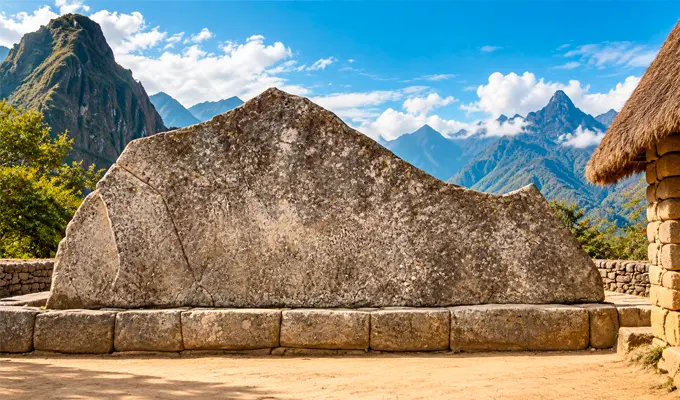
The Temple of the Condor is one of the spaces where the way the Incas worked with the natural forms of the rock can be best appreciated. In this sector, rocky outcrops and carved elements create a composition traditionally interpreted as the figure of a condor with its wings spread.
Rather than describing it as a “liturgical sanctuary” with a single proven function, it is more accurate to understand it as part of a complex of ceremonial enclosures in the Royal sector. The Decentralized Directorate of Culture of Cusco indicates that Route 3-B of Circuit 3 includes ceremonial enclosures such as the Temple of the Condor. To learn more about its characteristics, you can consult our guide to the Temple of the Condor in Machu Picchu.
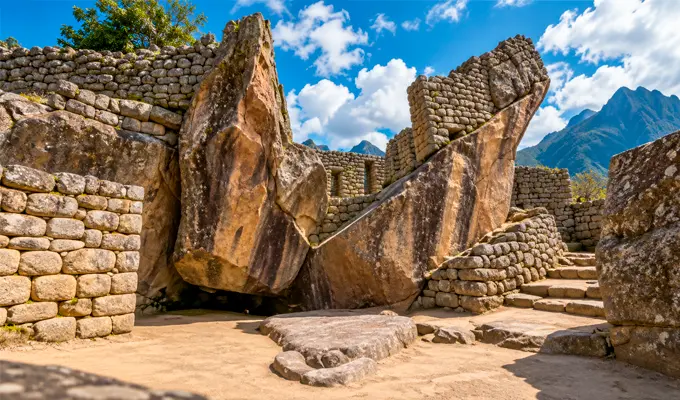
Inti Punku, known as the Sun Gate, is part of the ancient network of paths leading to Machu Picchu. For those arriving via the Inca Trail Network, this point marks one of the most anticipated moments of the journey, as its elevated position offers a wide view of the Inca city and the mountainous landscape surrounding it.
If you visit Machu Picchu with a regular ticket, it is important to know that access to Inti Punku is not available year-round. The official Machupicchu website establishes that this access corresponds to Circuit 1 – Route 1-C: Intipunku Gate, available only during the official high season. Therefore, before purchasing your ticket, it is advisable to check the current availability. You can find more information in our guide to Intipunku, the Sun Gate in Machu Picchu.
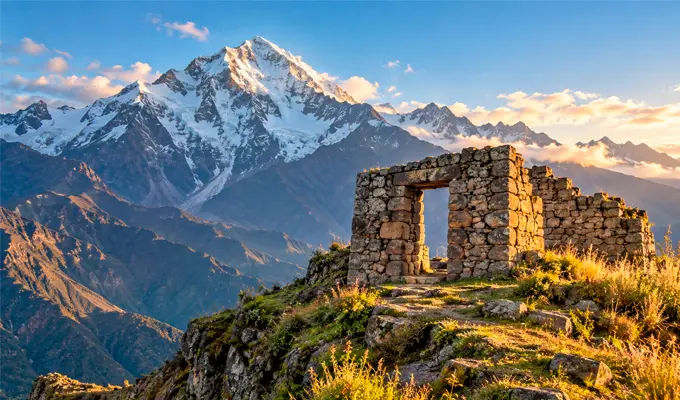
The Inca Bridge of Machu Picchu shows how Andean builders adapted their paths to steep terrain. The access follows a trail along the western slope of the mountain, where a section of the ancient path can be seen built along the rocky edge and associated with a wooden passage.
According to the official Machupicchu website, the visit takes place through Circuit 1 – Route 1-D: Inca Bridge, available only during the official high season. The authorized route allows visitors to approach the sector and observe this structure from the designated trail, always subject to the conservation and safety conditions established by the Ministry of Culture. To learn more about the route, you can consult our guide to the Inca Bridge in Machu Picchu.
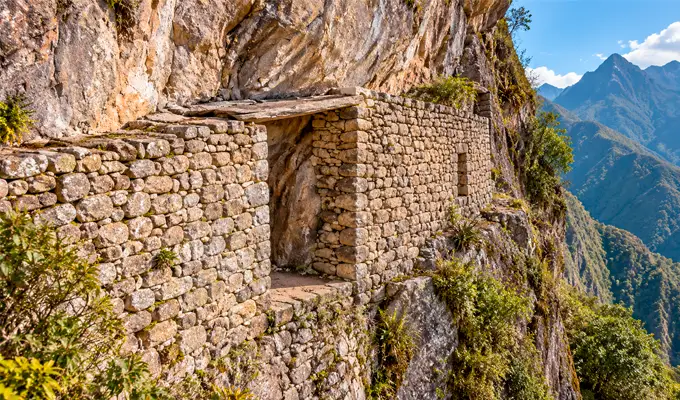
The places on this list showcase very different aspects of Machu Picchu: ceremonial architecture, mountains, viewpoints, paths, and spaces where the landscape is an essential part of the experience. However, not all of them can be visited with the same ticket, so the best way to organize your visit is to start by deciding which places are your priorities.
If you are looking for the classic panoramic view, the routes of Circuit 1 are generally the most relevant; if you want to explore emblematic sectors of the Inca city, Circuit 2 covers much of the classic route; and if you are interested in Waynapicchu or certain sectors of the Royal area, you will need to review the options available in Circuit 3. Inti Punku and the Inca Bridge, moreover, are only available through their specific routes during the official high season.
Before booking, always check what your ticket includes and whether the route is available for your visit date. Our guide to Machu Picchu tickets explains how to compare the 3 circuits and their 10 routes to choose the option that best suits your trip.
No. Machu Picchu is visited through 3 circuits that comprise 10 routes, and each ticket allows visitors to follow a specific route. Therefore, it is advisable to choose your ticket based on the places you are most interested in exploring.
These sectors are mainly associated with Circuit 2, especially Route 2-A. Before purchasing your ticket, always check the official route description because routes may be adjusted for conservation or safety reasons.
You need the ticket for Circuit 3 – Route 3-A: Waynapicchu Mountain. This route has controlled visitor capacity, so booking in advance is generally recommended.
No. Route 1-C to Inti Punku and Route 1-D to the Inca Bridge are available only during the official high season. Availability should be checked before purchasing your ticket.
To verify the historical, heritage, and access information included in this guide, official sources and specialized organizations were consulted: