
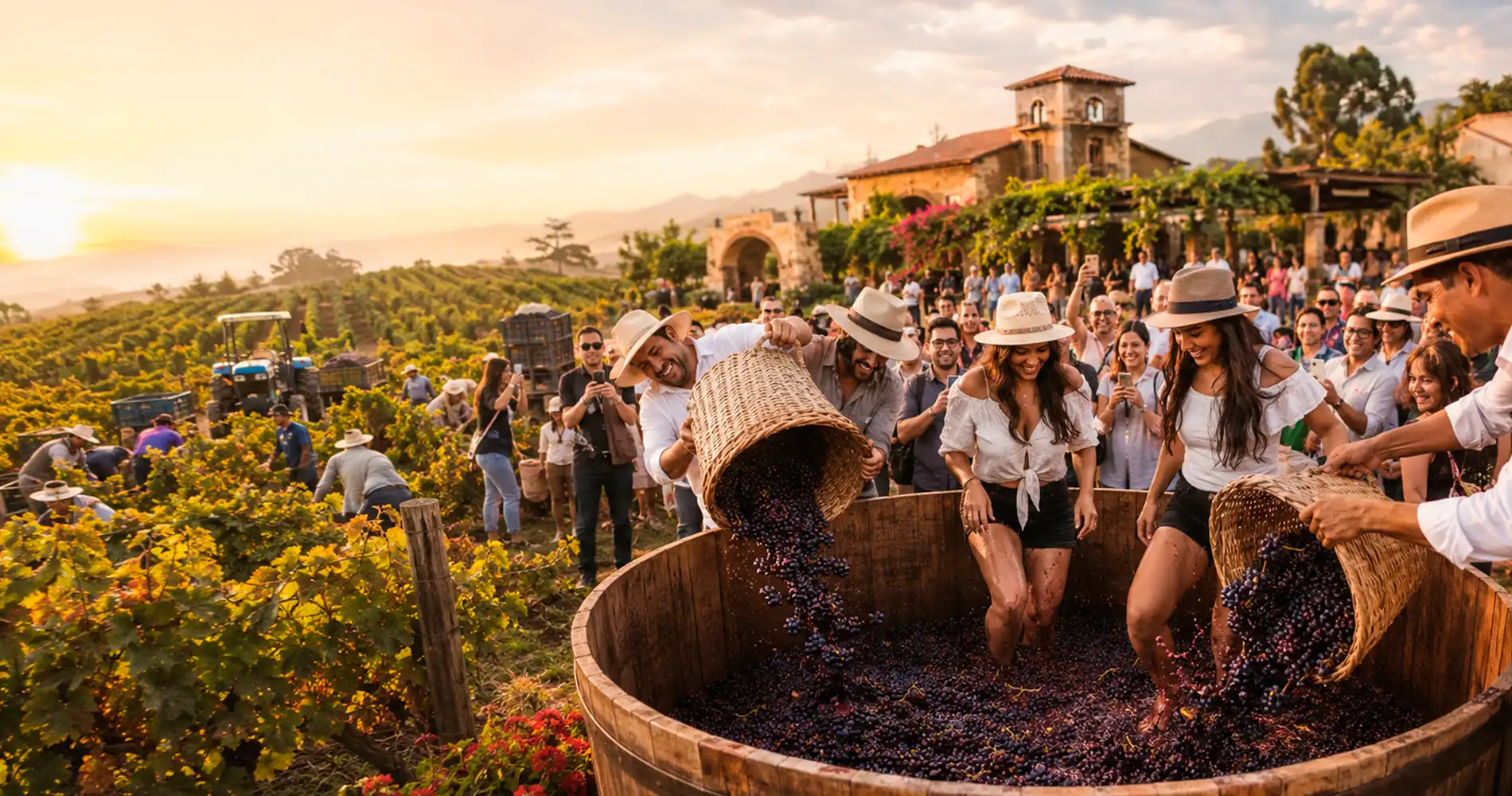
The Grape Harvest Festival is one of the most traditional, joyful, and deeply rooted celebrations on Peru’s coast. Every year, during the month of March, the sunny region of Ica comes alive to celebrate the abundance of the grape harvest and pay tribute to the production of high-quality wines and pisco, Peru’s national spirit and one of the country's greatest symbols of pride.
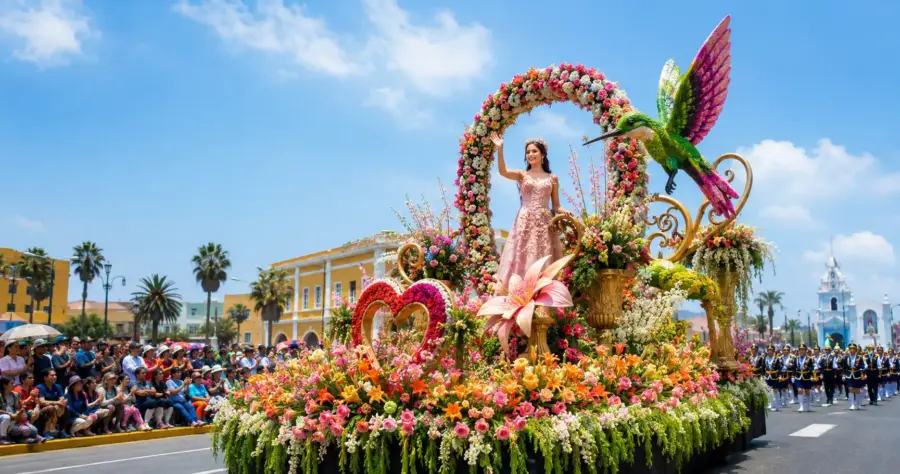
Throughout the festival, Ica’s fertile valleys and iconic wineries transform into vibrant venues where local identity shines. It is a time when residents and thousands of national and international visitors come together to enjoy a diverse program featuring colorful parades, traditional folk dances, live musical performances, and Peru’s renowned Creole cuisine. The festivities are complemented by guided wine and pisco tastings, allowing visitors to discover the aromas and unique characteristics of local grapes in a welcoming atmosphere filled with tradition and celebration.
| Aspect | Information |
| Date | Celebrated during the first weeks of March, coinciding with the grape harvest season. |
| Location | Ica, Peru, particularly in its vineyards, wineries, and the city's main public spaces. |
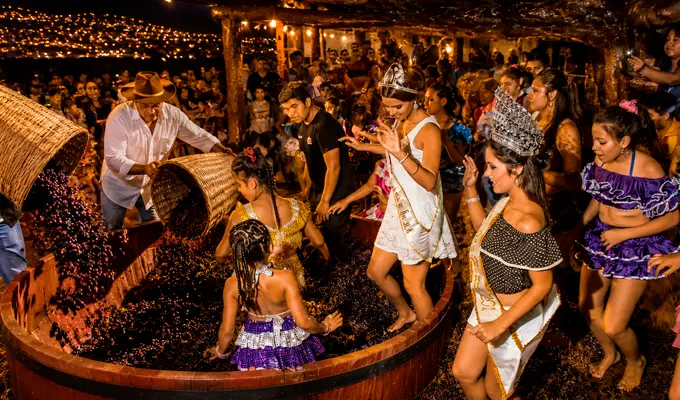
| Main Attraction | The traditional grape stomping ceremony, where participants recreate the ancestral method of extracting grape juice for wine and pisco production. |
| Featured Activities | Wine and pisco tastings, colorful parades, live concerts, the election of the Harvest Festival Queen, cultural competitions, and food fairs. |
| Why Visit? | It offers the opportunity to experience Peru’s winemaking culture, enjoy Ica’s traditional cuisine, and take part in one of the most important and representative festivals on the southern coast of Peru. |
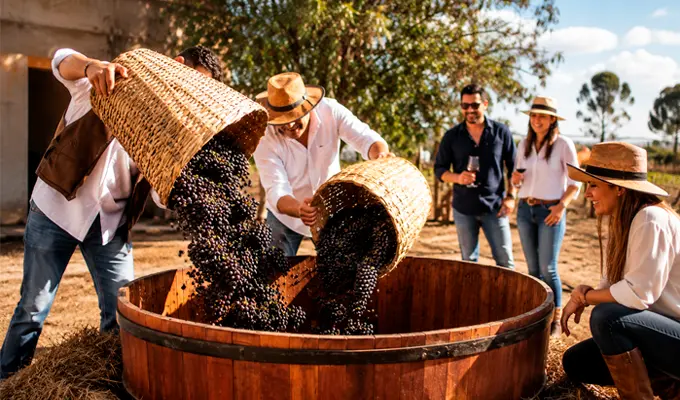
The grape harvest marks the peak of the agricultural cycle the grape picking season when vineyards reach their optimal level of ripeness. In Peru, this celebration takes on special significance in the warm region of Ica, a land blessed with abundant sunshine and fertile soil. Internationally recognized for its long-standing winemaking tradition, Ica is also known as the birthplace and leading producer of pisco, Peru’s iconic national spirit.
This major festival becomes a vibrant gathering that brings together historic wineries, passionate artisan producers, and enthusiastic travelers from around the world. Together, they enjoy a carefully curated program of events, wine and pisco tastings, vineyard tours, and traditional cultural activities that pay tribute to Peru’s wine heritage, pisco production, and Ica’s most cherished traditions.
The Grape Harvest Festival is generally held during the first weeks of March, when Ica’s vineyards are filled with the sweet aroma of ripe grapes, signaling the beginning of the harvest season.
Throughout this traditional celebration, visitors can enjoy a wide range of activities that capture the essence of Ica’s festive spirit, including:
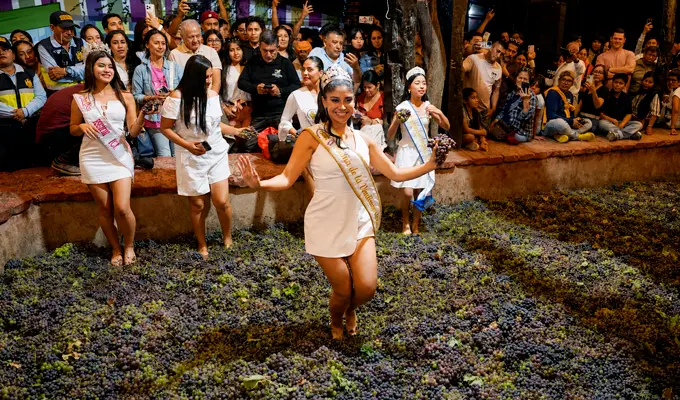
Among the most iconic and memorable moments that define the spirit of this celebration, three traditions stand out as symbols of the deep connection between people, the land, and the vineyards:
The Grape Harvest Festival is also the perfect opportunity to experience Ica’s outstanding cuisine, a culinary tradition that beautifully blends Afro-Peruvian, Andean, and Spanish influences. Designed to be shared during festive gatherings, the region’s signature dishes pair exceptionally well with local wines and pisco, including:
The Grape Harvest Festival offers an unforgettable opportunity to discover Peru’s fascinating winemaking culture, savor Ica’s exceptional cuisine, and experience the warm, lively atmosphere that defines this remarkable region.
More than just a seasonal celebration, the festival invites visitors to explore the history, craftsmanship, and passion behind Peru’s wines and pisco while honoring the traditions that have shaped Ica for generations. It is one of the most important and vibrant festivals on Peru’s southern coast an invitation to celebrate the richness of the land and raise a glass to a tradition proudly preserved in every bottle.