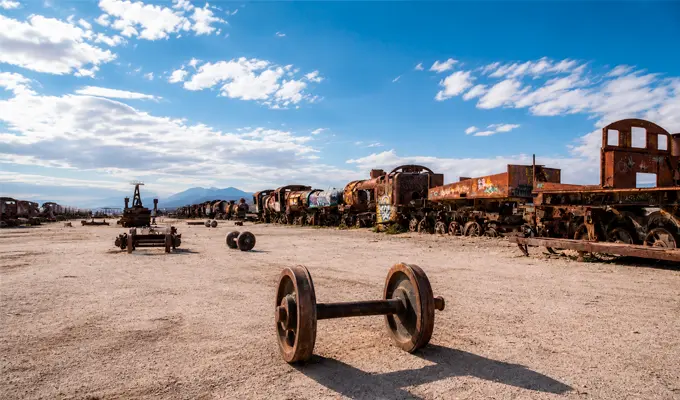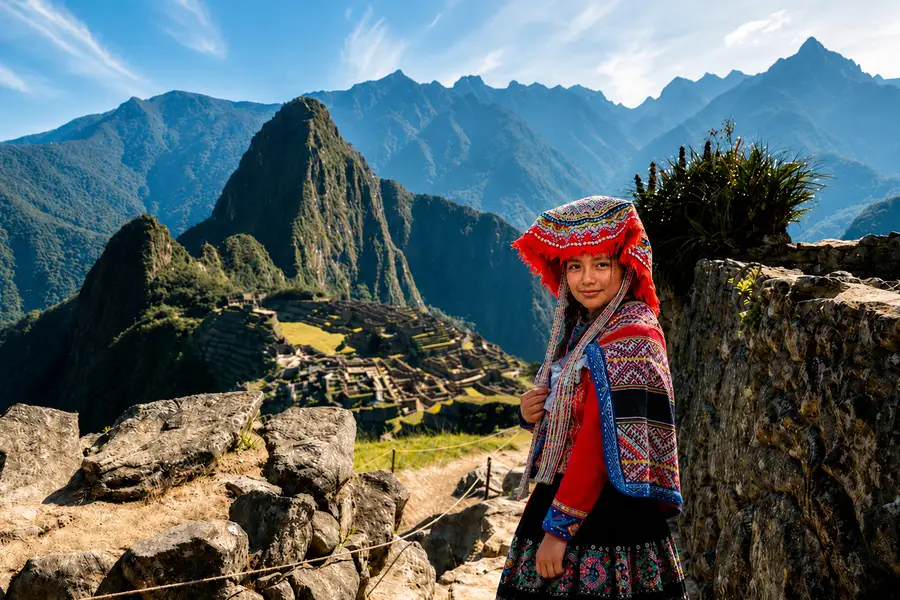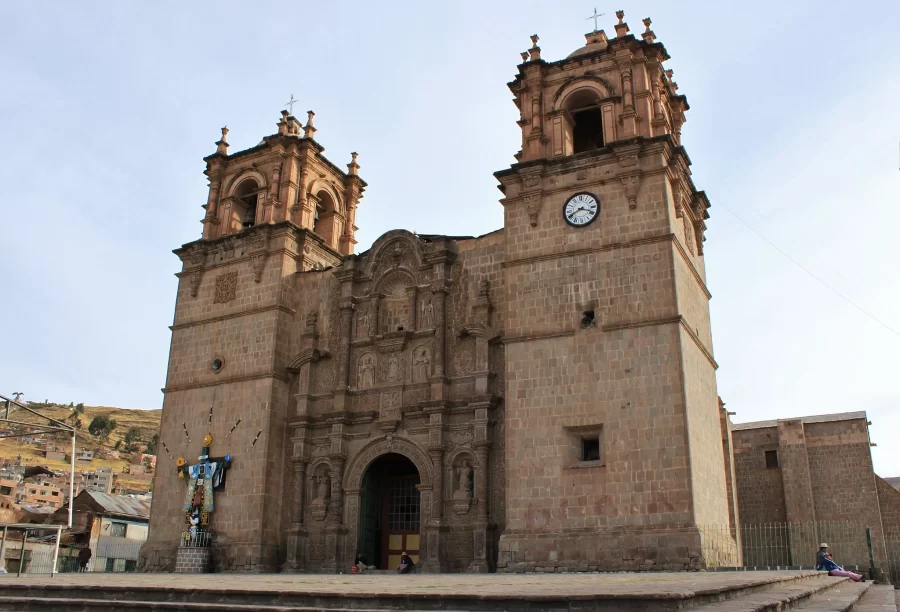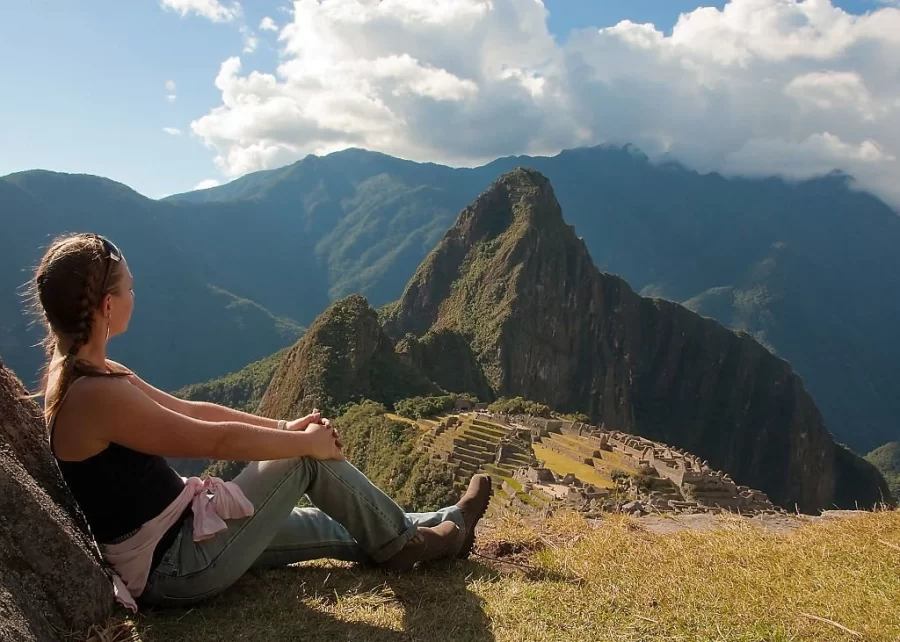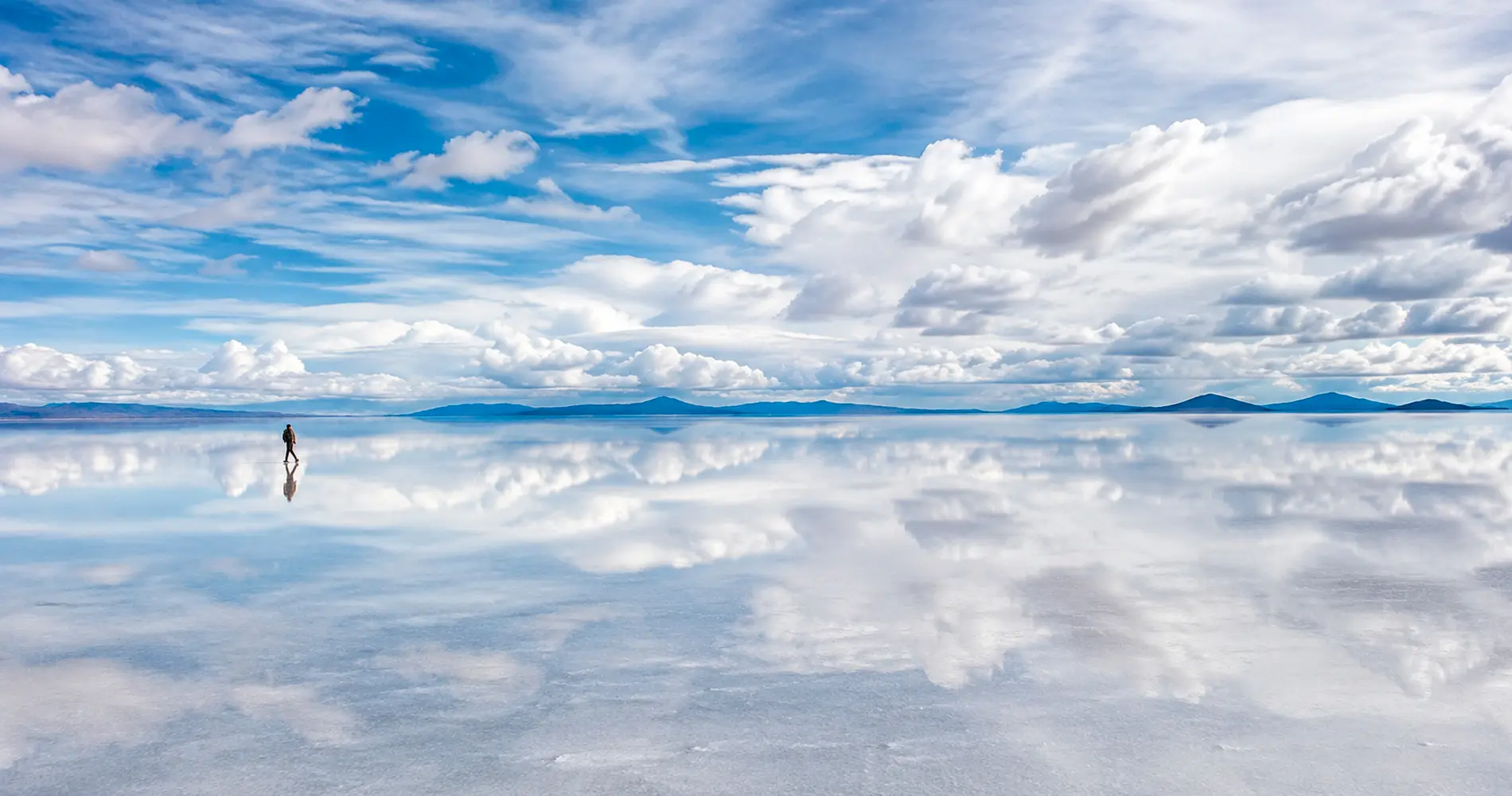

The Salar de Uyuni, in Bolivia, is one of the most stunning landscapes in the Andes: an immense white plain during the dry season and a vast natural mirror when rainfall covers the surface with a thin layer of water. If your trip begins in Peru, one of the most common routes is to connect Puno with the Salar de Uyuni through La Paz, combining Lake Titicaca and the Bolivian Altiplano in a single itinerary.
Planning this trip requires more than simply choosing a date. The time of year, altitude, weather, transportation, and length of the journey can completely change the experience. It is also worth deciding in advance whether you will visit only the salar or incorporate it into a broader route through Cusco, Puno, Lake Titicaca, La Paz, and Uyuni.
In this guide, you will find practical information to organize your trip: how to get there, the best time to visit, how many days you need, what to bring, how altitude affects you, and which route to take if you are traveling from Puno to Uyuni.
If you are planning your trip, these are the essential facts about the Salar de Uyuni to quickly understand where it is located, when to go, how much time to spend there, and how to get there from Peru.
| Fact | Information |
|---|---|
| Location | Potosí Department, southwestern Bolivia. |
| Landscape type | Salt desert and Andean highlands. |
| Surface area | More than 10,000 km². |
| Altitude | Approximately 3,600 m (11,811 ft) above sea level. |
| Usual departure point | City of Uyuni. |
| Recommended duration | 1 day to explore the salar; 3 or 4 days to also visit lagoons, geysers, and highland deserts. |
| Mirror effect season | Mainly from December to April, depending on rainfall and wind conditions. |
| Dry season | Mainly from May to November, when the geometric patterns of the salt stand out. |
| Common route from Puno | Puno → La Paz → Uyuni, including the border crossing between Peru and Bolivia. |
| Transportation within the salar | Most routes are operated in 4x4 vehicles. |
| Currency | Boliviano (BOB); carrying cash is advisable for remote areas. |
| Climate | High solar radiation, significant temperature changes, and cold nights, especially during the dry season. |
Important: weather conditions and water levels can affect access, routes, and the visibility of the mirror effect, so actual conditions should be checked before your trip.
To plan a trip to the Salar de Uyuni, the first step is to determine how many days you have and what type of experience you are looking for. A 1-day tour allows you to visit the main attractions of the salar, while a 3- or 4-day itinerary adds high-altitude lagoons, geysers, volcanoes, and other landscapes of the Bolivian Altiplano.
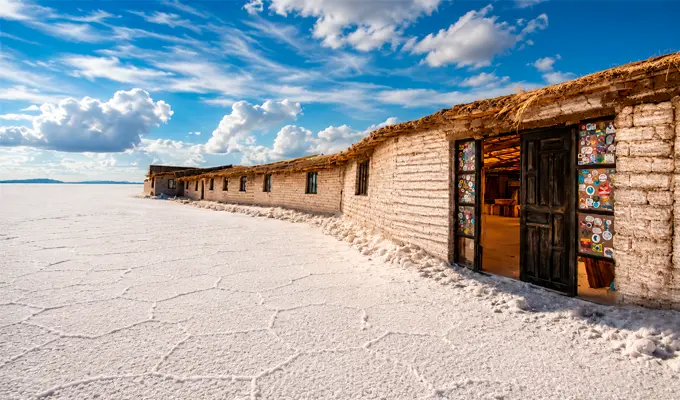
The time of year can completely change the landscape. Between December and April, rainfall may occur and, when a thin layer of water accumulates, the famous mirror effect appears. From May to November, drier conditions prevail, and the salt crust reveals its characteristic geometric patterns.
Most excursions depart from the city of Uyuni in 4x4 vehicles. If you are arriving from Peru, a common route is to travel from Puno to La Paz and then continue to Uyuni, planning your travel times and border crossing in advance.
Before booking, it is worth reviewing five basic aspects:
The Salar de Uyuni is an extensive salt flat located in the Potosí Department, in southwestern Bolivia. Covering an area of more than 10,000 km² and sitting at an altitude of approximately 3,600 m (11,811 ft) above sea level, it is the largest salt flat in the world and one of the most representative landscapes of the Andean Altiplano.
The salar was formed from ancient lakes that once covered this area of the highlands. Today, its surface changes considerably depending on the season: during the dry months, the white crust and polygonal salt patterns predominate, while during the rainy season, a thin layer of water can create the well-known mirror effect. Beneath the salt crust there are also mineral-rich brines, including lithium, a resource of great importance to Bolivia.
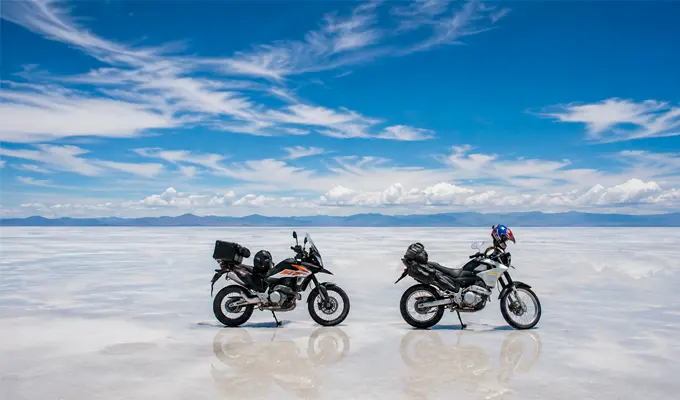
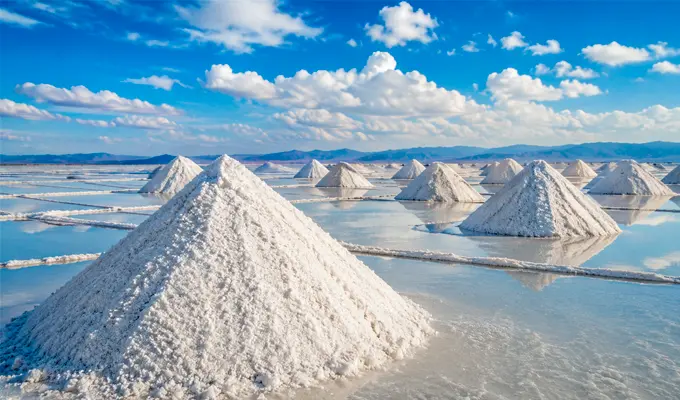
Visiting the Salar de Uyuni allows you to experience one of the most unique landscapes of the Bolivian Altiplano. Its vast size, seasonal changes, and lack of visual references create a very different experience depending on the time of year, the light, and the area of the salar you explore:
The best time to visit the Salar de Uyuni depends on the landscape you want to experience. In general, the rainy season may offer the mirror effect, while the drier months allow you to better appreciate the salt crust and its polygonal patterns. Conditions change each year, so it is advisable to consider recent weather conditions in addition to the month of your trip.
| Season | Approximate months | What you may find | Considerations |
|---|---|---|---|
| Rainy | December to April | Possible mirror effect when a thin layer of water covers the salt. | Access to some areas may be restricted if too much water accumulates. |
| Dry | May to November | White surface, salt crust, and clearly visible polygonal patterns. | Nights can be very cold, especially between June and August. |
| Transition | April and November | Variable conditions between wet surfaces and dry areas. | It does not guarantee that both landscapes will be visible at the same time. |
Rainy season (December to April): Rainfall can leave a thin layer of water over the salar and create the well-known mirror effect. However, it does not appear every day: it depends on recent rainfall, wind, and the amount of accumulated water. When water levels are high, some routes and attractions may be temporarily restricted.
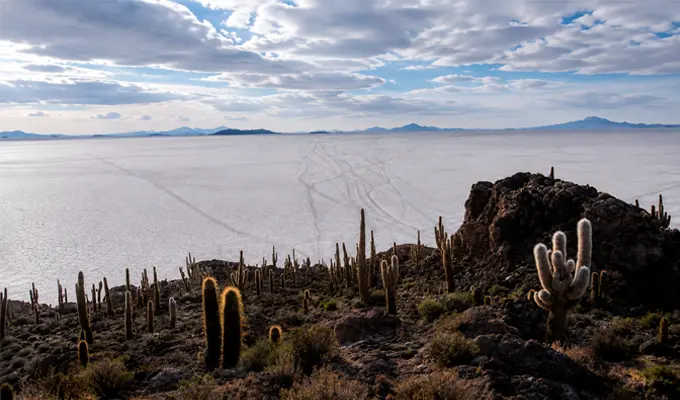
Dry season (May to November): A firm, white surface predominates, where the polygonal salt patterns can be seen more clearly. It is generally a favorable time to explore larger areas of the salar by 4x4, although access to places such as Isla Incahuasi always depends on road conditions and the day's operation.
The city of Uyuni is the main departure point for excursions to the salar. If you are traveling from Peru, one of the most practical routes is Puno → border crossing → La Paz → Uyuni. There are also land connections from other parts of Bolivia and Chile and, depending on availability, flights. It is advisable to check current schedules and conditions before purchasing your transfers.
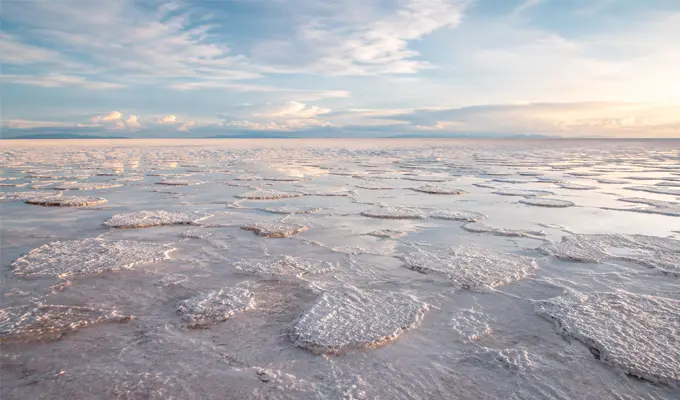
The number of days you need at the Salar de Uyuni depends on how much you want to explore. One day allows you to visit the main landscapes of the salar; two days give you more time to explore the surrounding area; and a 3- or 4-day route allows you to venture deeper into the highlands and visit lagoons, geysers, deserts, and other natural attractions.
The Salar de Uyuni combines high altitude, intense solar radiation, and significant temperature changes. For this reason, it is best to pack for both cold and sunny conditions, as well as wind and, during the rainy season, the possibility of walking across wet areas.
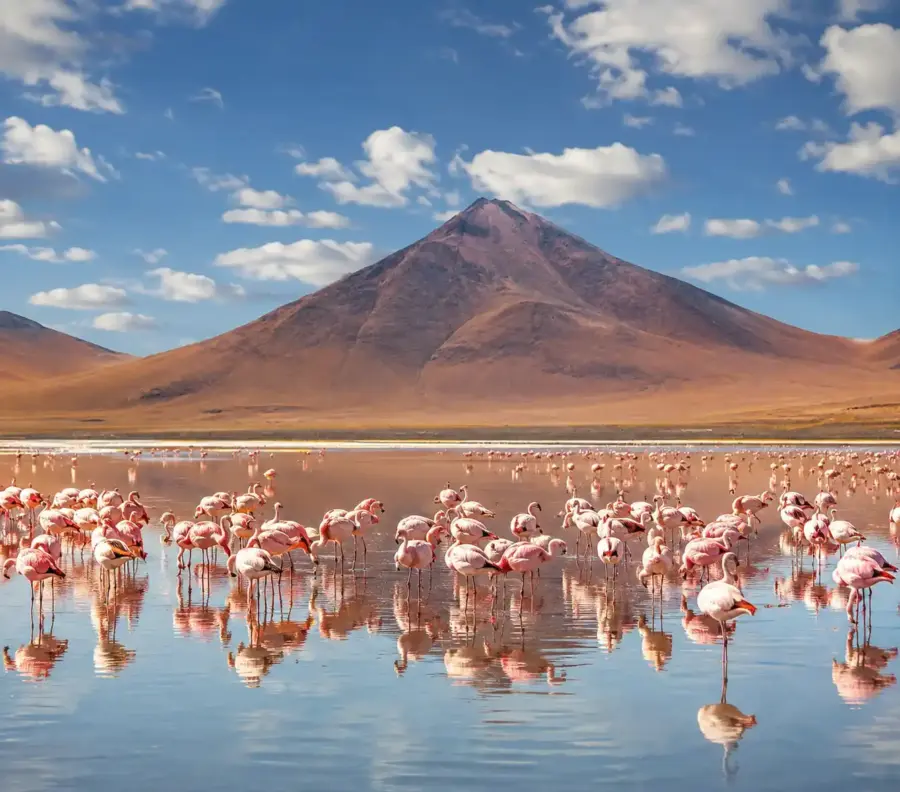
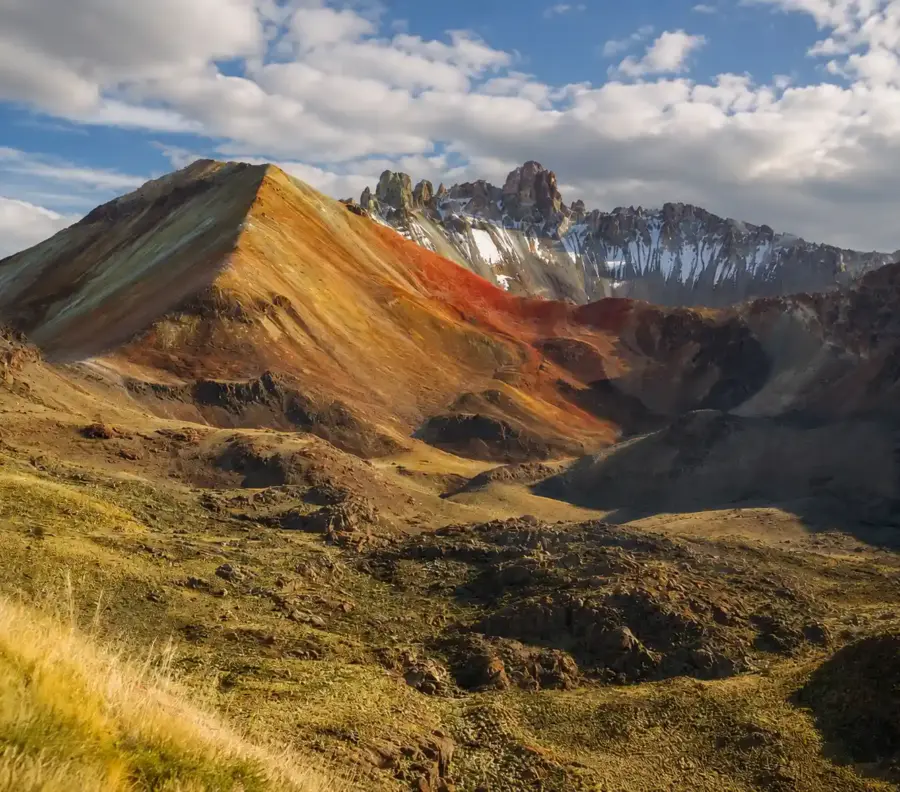
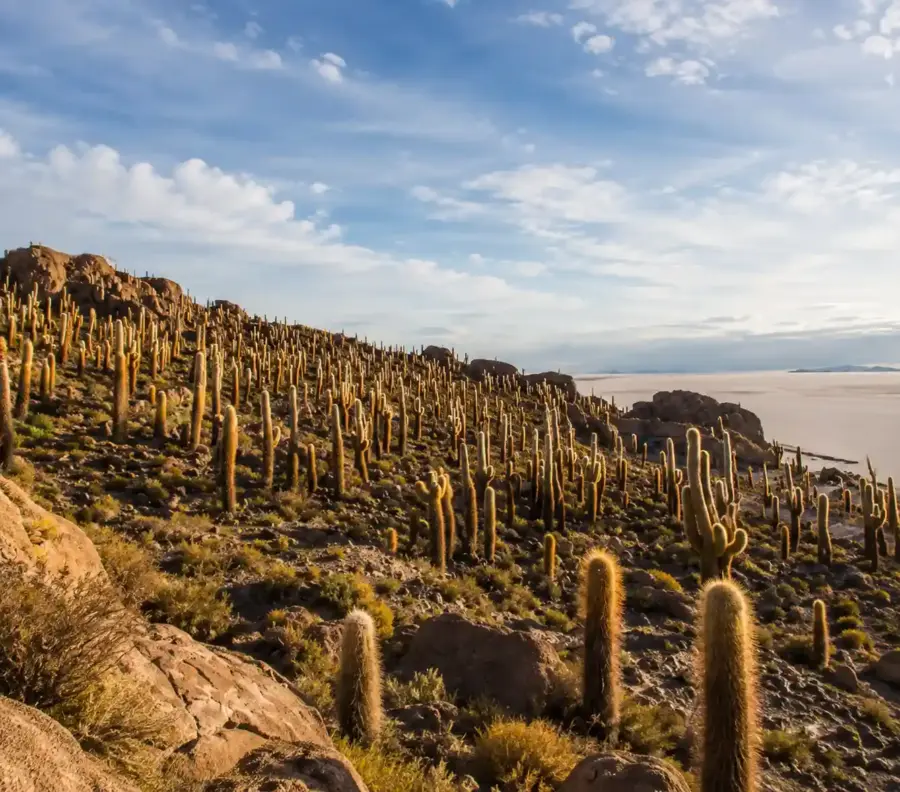
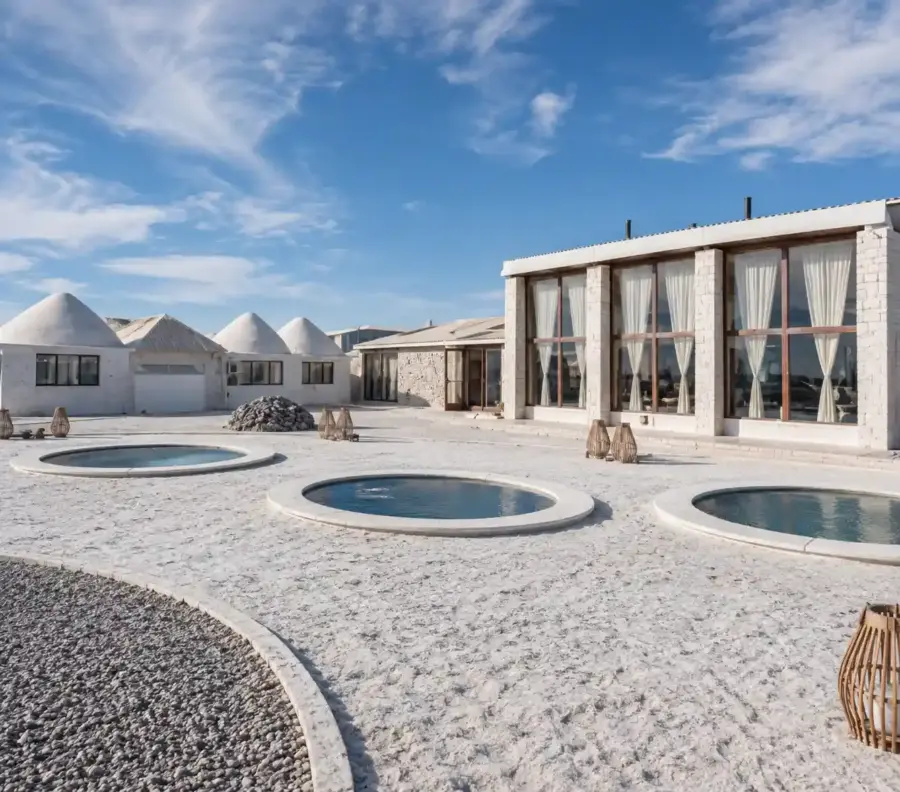
The Salar de Uyuni is located at approximately 3,600 m (11,811 ft) above sea level, so the altitude can be noticeable even for travelers in good physical condition. This is compounded by low humidity, wind, solar radiation, and temperature variations between day and night.
Everyone responds differently to altitude. As a general reference, the CDC recommends gradual acclimatization and paying attention to symptoms such as headache, dizziness, fatigue, or nausea.
The best area to stay depends on whether you are looking for convenience before or after your tour, an experience close to the salar, or a multi-day route through the highlands.
In the city of Uyuni, you can find connectivity and financial services, but along the salar and highland routes, coverage can be limited or unreliable. It is best to be prepared to spend several hours, or even days, with little or no mobile signal.
Visiting the Salar de Uyuni is generally a safe experience when it is carried out with proper logistics. The main risks are related to altitude, weather, long distances, road conditions, and vehicle condition, especially on multi-day routes.
The best option depends on the time you have available, the level of comfort you are looking for, and whether you want to explore only the salar or continue toward the lagoons and deserts of the highlands.
| Tour Type | Ideal For | What It Usually Includes | Considerations |
|---|---|---|---|
| 1-day tour | Travelers with limited time. | Salar, photo stops, and nearby attractions depending on the route. | Isla Incahuasi and other points depend on the season and accessibility. |
| 2-day tour | Those who prefer a more relaxed pace. | More time inside the salar and an overnight stay in the area or surroundings. | The itinerary varies considerably between operators. |
| 3- or 4-day tour | Travelers interested in exploring the highlands more extensively. | Salar, lagoons, deserts, geysers, and other landscapes of southwestern Bolivia. | Involves long journeys, higher altitudes, and simpler accommodation in remote areas. |
| Private tour | Couples, families, or travelers who value flexibility. | Vehicle and itinerary with greater flexibility for adjustments. | The price is usually higher than that of a shared tour. |
| Route from Peru | Those arriving from Cusco or Puno. | Overland connection to La Paz and onward travel to Uyuni. | You need to consider the border crossing, schedules, and overnight connections. |
Before booking, compare the number of passengers per vehicle, 4x4 condition, meals, entrance fees, type of accommodation, guide's language, and policy regarding itinerary changes. Price alone does not indicate the quality of the operation. For routes entering the Eduardo Avaroa Andean Fauna National Reserve, it is also advisable to consider the regulations of the protected area.
One of the most logical routes for traveling overland between Peru and Bolivia is Cusco → Puno → Lake Titicaca → La Paz → Uyuni. This itinerary allows you to travel across the highlands without retracing your steps and better distribute transfers over several days.
If Bolivia is an important part of your trip, our 3-week Bolivia itinerary can also help you plan travel times and connections beyond Uyuni.
Planning tip: Do not schedule international connections too tightly. Border crossing times, weather, and transportation operations can vary, so an itinerary with some flexibility is generally more comfortable and safer.
A good experience in Uyuni depends more on planning than on trying to control every detail. These recommendations can help reduce unexpected situations and make it easier to choose the right route.
Yes, especially if you are drawn to vast landscapes, photography, and highland journeys. The Salar de Uyuni offers very different experiences depending on the season: a white surface and salt patterns during the dry months, or the possibility of finding reflections on the water during the rainy season.
How much time you should dedicate to it depends on your travel style. One day may be enough to explore the salar and its main stops, while a 3- or 4-day route makes more sense if you want to add high-altitude lagoons, geysers, deserts, and other landscapes of southwestern Bolivia.
It is also important to consider that longer routes involve many hours in a 4x4, cold nights, high altitude, and more basic services. For travelers who enjoy remote destinations, this logistics is part of the experience; for others, a shorter visit from Uyuni may be more suitable.
It depends on the landscape you want to experience. Between December and April, there is a greater chance of finding water on the surface and seeing the mirror effect; from May to November, drier conditions prevail and the salt patterns are more clearly visible.
No. Even during the rainy season, it depends on recent rainfall, wind, and the amount of water accumulated on the salar.
A 1-day tour allows you to explore the main landscapes of the salar. With 3 or 4 days, you can add lagoons, geysers, deserts, and other areas of the Bolivian Altiplano.
A common route is Puno → Peru-Bolivia border → La Paz → Uyuni. It is advisable to check transportation schedules, border crossing information, and the immigration requirements applicable to your nationality in advance.
Yes. A practical route is Cusco → Puno → Lake Titicaca → La Paz → Uyuni. This sequence allows you to combine several Andean destinations in a single journey.
It is located at approximately 3,600 m (11,811 ft) above sea level. Everyone responds differently to altitude, so it is advisable to plan for gradual acclimatization and avoid strenuous activities if you experience discomfort.
The most practical option is to dress in layers: thermal clothing, warm layers, a windbreaker, and waterproof protection when appropriate. UV-protection sunglasses, sunscreen, and comfortable footwear are also important.
Generally, yes, as long as you travel with a properly organized operation and take altitude, weather, distances, and road conditions into account. On remote routes, it is advisable to choose reputable operators, vehicles in good condition, and follow the guide's or driver's instructions.
Requirements depend on your nationality and may change. Before traveling, check the current information provided by the immigration authorities of Peru and Bolivia and verify whether you need a passport, identity document, visa, or other entry requirements.