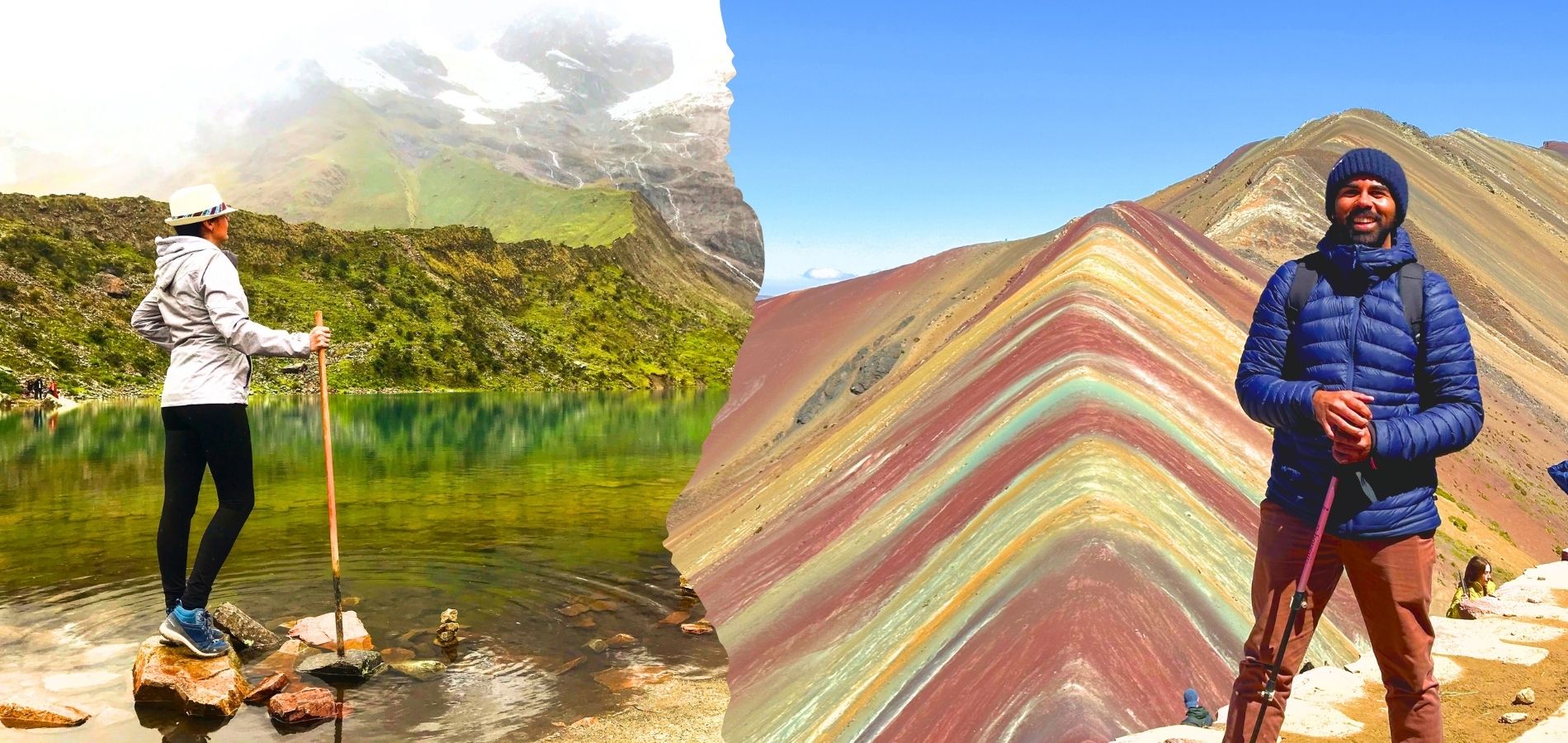

If you’re planning a trip to Cusco and deciding between Rainbow Mountain (Vinicunca) and Humantay Lake, this comparison will help you choose based on the type of scenery you want, altitude, hiking difficulty, and time of year. Both are high-altitude destinations, but they offer very different experiences: Vinicunca is known for its colorful mineral bands and high-Andean landscape, while Humantay stands out for its turquoise water surrounded by snow-capped peaks. Below, we compare the main differences so you can decide which excursion best fits your trip to Cusco.
| Fact | Rainbow Mountain (Vinicunca) | Humantay Lake |
|---|---|---|
| Location | Llaqto sector, Chillihuani community, Cusipata district, Quispicanchi province, Cusco | Soraypampa, Mollepata district, Anta province, Cusco |
| Altitude | 5,036 m above sea level | 4,200 m above sea level |
| Landscape | High-Andean mountain with naturally colored mineral bands | Glacial lake with turquoise water surrounded by snow-capped peaks |
| Typical hike | 3 km from Llaqto, about 1 hr 45 min | From Soraypampa, about 1–2 hours depending on pace |
| Main challenge | Very high altitude, above 5,000 m | Trail gradient and altitude |
| Recommended season | Year-round; preferably during the dry season from April to October | Year-round; May to November generally brings more sunshine, while rainfall is more frequent from December to April |
| Best for | Geological scenery, photography, and a high-altitude mountain experience | Snow-capped peaks, turquoise water, nature, and photography |
Official sources: Peru’s National Inventory of Tourism Resources from MINCETUR/GERCETUR Cusco for Rainbow Mountain (Winikunka) – Cusipata sector and Humantay Lake.
Before visiting Rainbow Mountain or Humantay Lake, allow time to acclimatize in Cusco, especially if you are arriving from a low-altitude location. The CDC Yellow Book states that acute acclimatization occurs mainly during the first 3 to 5 days and recommends keeping physical activity light during the first 48 hours. Avoid scheduling a demanding hike immediately after arriving in Cusco.
For either excursion, bring layered clothing, a waterproof or windproof jacket, hiking shoes with good traction, a hat or cap, sunglasses, sunscreen, water, and a lightweight backpack. Avoid carrying unnecessary weight: later in this article you’ll find a destination-specific packing list for Humantay and Vinicunca because the conditions and physical demands are not exactly the same.
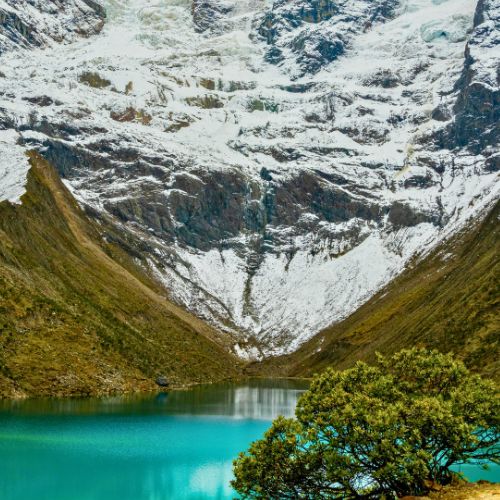
Humantay Lake is located at Soraypampa, in the district of Mollepata, province of Anta, Cusco region. Peru’s National Inventory of Tourism Resources from MINCETUR/GERCETUR Cusco places the lake at 4,200 m above sea level, at the foot of the snow-capped Humantay peak. For more details on location, access, and the site itself, see our complete guide to Humantay Lake.
The usual route continues from Mollepata to Soraypampa, where the final section is completed on foot. MINCETUR’s official record indicates approximately 1 hour of walking from Soraypampa, although actual hiking time can vary depending on pace, acclimatization, and trail conditions. Along the way, you’ll see high-Andean scenery and views of the Humantay peak.
If you prefer an organized excursion with transportation, guide, and meals from Cusco, see our Humantay Lake full-day tour from Cusco.
The lake is famous for its turquoise color. According to MINCETUR’s official record, this appearance is related to the clarity of the water, the presence of green microalgae, and the reflection of the sky and solar radiation. The lake formed from meltwater from the surrounding snow and ice, which explains its glacial character and high-mountain setting.
Humantay Lake also has cultural and spiritual significance for Andean communities. MINCETUR notes that some visitors and ritual specialists leave offerings to Pachamama and build apachetas as gestures of gratitude. These practices are part of the cultural dimension of the site, so they should be observed respectfully without altering existing formations.
Rainbow Mountain (Vinicunca) is located in the Llaqto sector of the Chillihuani rural community, Cusipata district, Quispicanchi province, Cusco region. Peru’s National Inventory of Tourism Resources from MINCETUR/GERCETUR Cusco records the attraction at 5,036 m above sea level. For more information on access, features, and recommendations, see our Rainbow Mountain travel guide.
Vinicunca’s colored bands are natural. According to MINCETUR, they formed over millions of years through mineral sedimentation and tectonic activity. The mineral composition of the terrain explains the different tones visible on the mountain:
Via the Cusipata route, the road continues to the Chillihuani community and then the Llaqto sector. From there, MINCETUR records a final walking section of approximately 3 km, with a reference time of about 1 hour 45 minutes. The main challenge is the altitude, so arriving acclimatized and keeping a steady pace is important. To better understand the physical demands, read Is it hard to climb Rainbow Mountain?
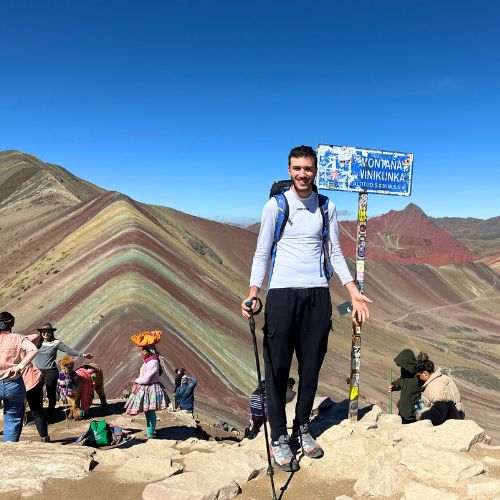
Rainbow Mountain (Vinicunca) can be visited year-round, but the official MINCETUR record recommends the dry season, from April to October, when weather conditions are generally more favorable for seeing the mountain’s colorful slopes.
As a regional climate reference, SENAMHI Cusco indicates that rainfall is generally low or scarce, especially between May and August. These months often provide better trail conditions and a greater chance of clear views. However, above 5,000 m, cold temperatures, wind, and sudden weather changes can occur at any time of year.
During the rainy season, a visit is not necessarily ruled out, but visibility may decrease and the trail can become muddy or slippery. Before traveling, check the latest forecast from SENAMHI and keep in mind that high-mountain conditions can change quickly.
Humantay Lake can be visited throughout the year. According to the official MINCETUR/GERCETUR Cusco record, rainfall is more frequent between December and April, while from May to November the weather remains cold but daytime conditions are generally sunnier.
If your priority is a generally drier trail and a better chance of seeing the lake and surrounding peaks with good visibility, May to November is usually the more favorable period. Even then, this is a high-mountain environment, so bring protection from rain, cold, wind, and sun at any time of year.
Between December and April, more frequent rain can make the trail wet or slippery. The excursion is still possible, but check weather conditions beforehand and use footwear with good traction, waterproof clothing, and a rain-resistant outer layer.
For both excursions, travel with a lightweight backpack and dress in layers. The main difference is that Vinicunca rises above 5,000 m and is generally more exposed to cold and wind, while at Humantay the gradient and a wet or slippery trail may require greater attention to footwear and footing.
Tip: avoid carrying unnecessary weight. On both hikes, a compact backpack with water and protection from cold, rain, and sun is usually more practical than carrying equipment you are unlikely to use.
Rainbow Mountain (Vinicunca) stands at 5,036 m above sea level, while Humantay Lake is at 4,200 m. Both excursions therefore take place at high altitude, making proper acclimatization in Cusco an important part of preparing for either hike.
Peru’s Ministry of Health (MINSA) recommends ascending gradually to high-altitude areas to help the body adapt. The CDC Yellow Book also states that acute acclimatization occurs mainly during the first 3 to 5 days after ascent.
During your first days at altitude, keep physical activity light, stay adequately hydrated, eat moderately, and get enough rest. The CDC also recommends avoiding alcohol during the first 48 hours at altitude. If you use coca tea or coca candies as part of a traditional Andean practice, do not consider them a substitute for acclimatization or medical care.
While acclimatizing, prioritize gentle activities and avoid demanding ascents. If symptoms consistent with altitude sickness appear, do not continue ascending; if symptoms become severe, worsen, or include significant breathing difficulty, loss of coordination, or confusion, seek medical attention promptly. Being physically fit does not eliminate the risk of altitude sickness.